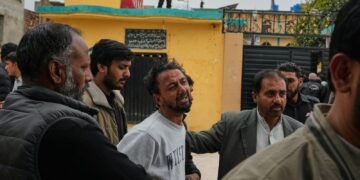























Suicide Bombing in Pakistan Mosque Claims At Least 31 Lives
In a tragic attack on a Shiite mosque near Islamabad, at least 31 individuals have lost their lives and 169 others have been injured due to a suicide bombing during Friday morning prayers. The chaos unfolded as worshippers gathered, turning a moment of reflection into a scene of horror.
Why It Matters
This incident highlights the ongoing security challenges faced by Pakistan, particularly concerning sectarian violence. As the country grapples with increasing militant attacks, the implications of such acts extend beyond immediate fatalities, affecting national stability and inter-community relations.
Key Developments
- The Islamic State has claimed responsibility for the bombing.
- Witnesses recounted harrowing experiences, detailing the immediate aftermath of the explosion.
- Pakistani leaders condemned the attack, emphasizing the need for accountability and security measures.
- The incident has overshadowed the anticipated Basant kite flying festival, with officials canceling related events.
Full Report
Eyewitness Accounts
Hussain Shah, a worshipper at the mosque, described the moment of the explosion, stating, “I immediately thought that some big attack had happened.” Witnesses recounted a chaotic scene with injured individuals calling for help as bodies lay strewn on the mosque’s floors.
Government Reactions
President Asif Ali Zardari and Prime Minister Shehbaz Sharif both condemned the attack, expressing condolences to the victims’ families. Zardari labeled the targeting of civilians as “a crime against humanity,” while Sharif called for a thorough investigation. Sharif mentioned efforts to identify and bring the perpetrators to justice.
Accusations of Responsibility
Pakistan’s Defense Minister Khawaja Muhammad Asif suggested that the bomber was linked to Afghanistan and alleged that the Taliban acted as a proxy for India in this incident. He claimed that security personnel attempted to intercept the attacker before the explosion. In contrast, India’s foreign ministry dismissed the allegations, stating that Pakistan should focus on its internal issues rather than blaming other nations for its problems.
Impact on Society
The bombing has significantly affected societal events in Pakistan, overshadowing the planned return of the Basant festival, a traditional kite-flying celebration. Authorities canceled related concerts and events in light of the tragedy, reflecting the somber mood following the attack.
Escalating Violence in Pakistan
Pakistan has seen a rise in militant activity, particularly in regions like Balochistan. Recent violence attributed to the Baloch Liberation Army (BLA) resulted in severe disruptions across the province, raising concerns about escalating conflict and the government’s ability to safeguard its citizens.
Context & Previous Events
In recent months, Pakistan has faced increased militant attacks, particularly from groups seeking autonomy and a larger share of resources in Balochistan. The BLA’s recent coordinated attacks in the province led to significant casualties, with security forces responding with a crackdown that resulted in the deaths of numerous militants.