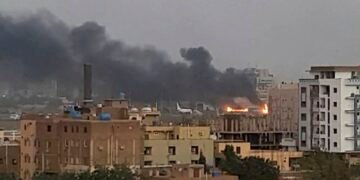























Sudan on the Brink: Conflict Erupts Amid Political Fractures
Sudan is spiraling into chaos as rival military factions clash in the capital, Khartoum, jeopardizing the hard-won hopes for democracy that emerged after the 2019 revolution. With 45 million citizens caught in the violence, the country faces the threat of total collapse reminiscent of the turmoil in Yemen and Libya.
Why It Matters
The ongoing conflict in Sudan threatens not only the stability of the nation but also poses a risk of escalating humanitarian crises. The fighting disrupts the lives of millions, compounding the difficulties faced by a country struggling to transition from dictatorial rule to democratic governance. As international communities grapple with its implications, the situation may serve as a cautionary tale regarding the fragility of revolutions.
Key Developments
- Rival military factions, the Sudanese Armed Forces (SAF) and the Rapid Support Forces (RSF), engaged in fierce battles over control of strategic locations in Khartoum.
- At least 180 people have died in the recent clashes, including three humanitarian workers from the World Food Programme.
- 45 million Sudanese citizens remain unable to leave their homes due to the escalating violence.
- The conflict stems from deep-rooted animosities between the SAF, led by Gen. Abdel Fattah al-Burhan, and the RSF, led by Mohamed Hamdan Dagalo, known as Hemeti.
- The instability raises concerns of a humanitarian crisis and impacts the broader region.
Full Report
Recent Violence
The recent outbreak of fighting began as rival military factions vied for control of key military installations and airports in Khartoum. Reports indicate that violent confrontations quickly spread across the nation, dramatically endangering civilian life.
The fighting is not merely a power struggle between two factions; it follows years of political unrest and failed negotiations between military and civilian leaders. The SAF and RSF, previously allied during the 2019 coup that ousted longstanding dictator Omar al-Bashir, have now turned against each other, further complicating Sudan’s political landscape.
A Fragile Transition
Sudan’s initial transition to a civilian government was characterized by hope but marred by systemic challenges. After the dictatorship’s fall in April 2019, pro-democracy movements struggled to convert their momentum into lasting political power. The leadership disagreements weakened their bargaining position against the military, and incidents such as the violent dispersal of a protest sit-in in June 2019 further exacerbated tensions.
International Response and Failed Policies
In the aftermath of the 2021 military coup that removed civilian Prime Minister Abdalla Hamdok, international entities like the United States and the United Nations attempted to reinvigorate a transitional government. However, the proposed plans have been criticized as ineffective, given the prevailing power dynamics favoring military leaders. Histories of failed unification efforts in similar contexts serve as a stark reminder of the risks facing Sudan as it navigates its political future.
Context & Previous Events
Omar al-Bashir’s government was overthrown on April 11, 2019, after months of protests led by unions and civil society organizations. The SAF and RSF allied in the coup against Bashir, which inspired hopes for a more democratic future. However, leaders of the SAF and RSF soon could not reconcile their ambitions for power, leading to ongoing instability and violence within the country.
Following the coup in October 2021, attempts to reinstate a civilian-led government have faced criticism, as the underlying issues of power dynamics remain unaddressed. The humanitarian situation continues to deteriorate, especially in regions like Darfur, where ethnic conflicts fueled by RSF troops threaten the lives of millions.