






















Trump Administration Freezes Funds for States Amid Allegations of Benefit Fraud
The Trump administration has intensified its efforts to combat what it claims is widespread benefits fraud, resulting in a funding freeze for social services in five Democratic-led states. This controversial decision has sparked legal battles and raised concerns about its potential impact on public trust in welfare programs.
Why It Matters
This development is significant as it not only affects millions of individuals and families who depend on social services but also reflects the ongoing political tensions between the Trump administration and Democratic leadership. The freeze could further complicate the already challenging landscape of welfare management and public perception of legitimacy within the safety net system.
Key Developments
- The Trump administration has announced a freeze on approximately $10 billion in social services funding for California, Colorado, Illinois, Minnesota, and New York.
- A district judge in New York has temporarily blocked the funding freeze, citing legal concerns.
- Officials allege that these states are unlawfully providing benefits to undocumented immigrants, though no evidence has been presented.
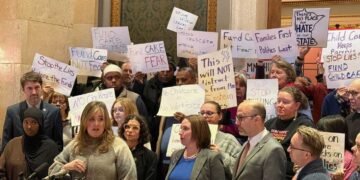
- Democratic leaders are contesting the funding freeze in court, describing it as a political maneuver rather than a genuine effort to tackle fraud.
- Public policymakers have pointed out systemic issues within welfare programs, indicating that opportunistic fraud often arises from the program’s structure and mandates.
Full Report
Administration Claims and Legal Pushback
In a move that has drawn sharp criticism, the Trump administration has accused five Democratic-led states of facilitating “systematic fraud” within social service programs. Letters to these states assert a belief that benefits are being illicitly provided to undocumented immigrants. HHS spokesperson Andrew Nixon stated that this action is necessary to ensure that taxpayer dollars are allocated correctly. However, the lack of concrete evidence has raised questions about the validity of these claims.
In response, leaders from the targeted states have quickly filed lawsuits. New York Attorney General Letitia James labeled the freeze as “cruel,” arguing that it aims to punish states opposing the President’s policies. California’s Attorney General Rob Bonta likened the situation to prior temporary suspensions of benefits during the federal shutdown, framing it as an attack on vulnerable populations.
The Parameters of Fraud and Precedents
Public policy experts acknowledge that while some fraud occurs in welfare programs, the majority is attributed to corrupt providers rather than recipients. Researcher Matt Weidinger from the American Enterprise Institute highlighted that fraudulent activities generally target the system’s vulnerabilities, which have persisted despite numerous oversight mechanisms. Efforts to prevent fraud are often hampered by complex regulatory frameworks and a patchwork of federal and state programs.
Implications for Citizens
Those reliant on social services—such as food assistance and childcare subsidies—could face significant disruptions as states grapple with compliance to demands for extensive data on anti-fraud measures. The fallout could further erode public trust in essential safety nets meant to support millions of Americans.
Context & Previous Events
The topic of benefits fraud is not new and has historically generated political controversy. The first significant social welfare program in the U.S. focused on pensions for Civil War veterans, which similarly faced allegations of mismanagement. More recently, a significant scandal in Mississippi involved the misspending of $101 million, which was also in question during the Biden administration. The complexity and scale of social service programs make them susceptible to abuse, a concern reiterated by experts in the field.






