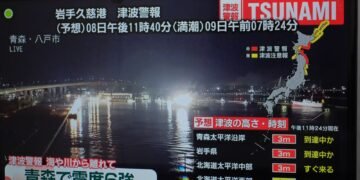























Powerful Earthquake Strikes Off Northern Japan, Tsunami Alert Issued
A magnitude 7.5 earthquake has struck off the coast of northern Japan, prompting a tsunami warning and resulting in injuries to 23 individuals, one of whom is reported to be in serious condition. The quake occurred around 11:15 PM local time, approximately 80 kilometers from Aomori prefecture.
Why It Matters
This seismic event underscores Japan’s vulnerability to earthquakes and tsunamis, especially given its historical context of devastating natural disasters. With recent memories of the catastrophic 2011 quake still fresh, the situation raises significant concerns about public safety, infrastructure preparedness, and overall emergency response capabilities.
Key Developments
- Injuries and Evacuations: Reports indicate 23 injuries due to falling debris, leading to the evacuation of 90,000 residents who were advised to seek higher ground.
- Tsunami Waves: Initial measurements reported waves up to 70 centimeters at Kuji port in Iwate prefecture, with lesser waves recorded in surrounding areas.
- Infrastructure Impact: About 800 homes experienced power outages, Shinkansen bullet trains and regional rail services were suspended, and damage assessments are ongoing.
- Emergency Response: Approximately 480 people took temporary shelter at Hachinohe Air Base, with defense forces deploying 18 helicopters for damage assessment.
- Nuclear Safety: Water leaks were reported at the Rokkasho fuel reprocessing facility, though levels remain safe according to the Nuclear Regulation Authority.
Full Report
Seismic Activity and Immediate Responses
Nobuo Yamada, a convenience store owner in Hachinohe, described the shaking as unprecedented. Following the earthquake, a tsunami alert was quickly issued, warning residents of potential surges of up to 3 meters (10 feet). Chief cabinet secretary Minoru Kihara urged citizens to find refuge on higher ground as a precautionary measure.
Authorities have mobilized significant resources for relief efforts. Around 800 homes are without electricity, while major train services were interrupted. In the aftermath, Satoshi Kato, a vice principal at a local high school, reported severe traffic congestion as residents attempted to evacuate amid rising panic.
Nuclear Concerns
The incident at the Rokkasho facility was significant, with approximately 450 liters of water escaping from a cooling area. However, officials assured the public that levels were within normal limits and posed no safety risks.
Recovery Efforts
As the earthquake’s aftershocks continue to be felt, Japanese government officials have rescinded tsunami advisories but maintain heightened vigilance. They cautioned residents to remain attentive in the coming week as the risk of aftershocks persists.
Context & Previous Events
Japan’s history with devastating seismic events is notable, particularly the catastrophic earthquake and tsunami of 2011, which resulted in approximately 20,000 deaths and a nuclear crisis at the Fukushima Daiichi Power Plant. Satoshi Harada, an expert with the meteorological agency, reminded the public of the potential for similar occurrences in the future, emphasizing the importance of preparedness in the face of such disasters.