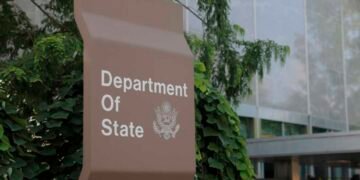























State Department Archives Pre-Trump Posts on Social Media
The State Department has announced it will remove all posts made on its public accounts on the social media platform X prior to President Trump’s return to office on January 20, 2025. This decision reflects a shift toward archiving older content away from public view, raising concerns about historical transparency.
Why It Matters
This development underscores the ongoing tension between transparency and control in government communication. By moving older posts into an internal archive accessible only through Freedom of Information Act requests, the State Department risks limiting public access to historical records of U.S. diplomacy and policy announcements. This change also coincides with broader efforts by the Trump administration to reshape public narrative on various critical issues.
Key Developments
- The State Department will internally archive X posts predating Trump’s second term but will not make them publicly visible.
- Requests for viewing older posts will require filing a Freedom of Information Act request, differing from standard practices of the federal government.
- Staff expressed concerns about the implications for historical record-keeping and transparency.
- The directive applies to all official State Department accounts, including those of embassies and programs.
- Relatedly, the CIA has recently discontinued its World Factbook, a reference source used widely for country-specific data.
Full Report
Content Removal and Justifications
In its recent announcement, the State Department confirmed that posts from prior administrations, including those from Presidents Biden and Obama, will also be removed from public view. Officials stated that the primary aim is to prevent confusion regarding current government policy and ensure a unified messaging platform for the administration. An unnamed spokesperson explained that this action is intended to “preserve history while promoting the present.”
Concerns Over Historical Access
Current and former State Department employees have voiced concerns about how this move could hinder the public’s ability to access a historical record of governmental communications. Orna Blum, a retired senior foreign service officer, emphasized that these posts encapsulate vital aspects of U.S. diplomacy, including cultural exchanges and vital policy announcements. “Once removed, there will be no easy public, searchable access to this history,” Blum stated, expressing skepticism about the reliability of FOIA as a substitute for open archives.
Similar Actions Across Federal Agencies
This action mirrors other recent changes in U.S. government agencies. The CIA’s withdrawal of its World Factbook, which has been a critical resource since 1962, was met with confusion and concern about the loss of reputable information. The State Department’s directive similarly raises questions about the preservation of factual discourse in the face of political narratives.
Impact on Future Transparency
The shift in the State Department’s approach to social media messaging reflects a broader trend of using platforms for direct political communication. Critics fear that these changes signal a decline in transparency during a time when public scrutiny is crucial. National discourse now increasingly occurs within filtered messaging frameworks that may echo administration priorities while obscuring historical context.
Context & Previous Events
Historically, the transition of U.S. government social media accounts has allowed for a seamless continuation of publicly transmitted policy and messaging. Under previous administrations, these records were largely maintained in public view, facilitating transparency. Recent actions highlight a significant transition in how government communications are managed, particularly during the Trump administration, which has frequently altered public records and resources that do not align with its messaging agenda. Furthermore, this contrasts with the handling of social media accounts for other political figures, where access to historical posts and statements typically remains open to the public.






