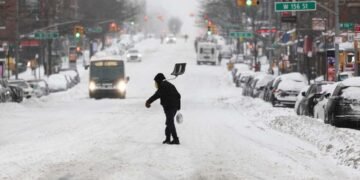























Winter Storm Disrupts Life Across Eastern U.S.
A powerful winter storm is sweeping through the eastern two-thirds of the United States, bringing heavy snowfall, dangerous ice, and frigid temperatures. With millions impacted from New Mexico to Maine, the storm has left nearly a million customers without power, particularly in states like Tennessee, Mississippi, and Louisiana, raising serious concerns about safety and readiness.
The significance of this winter weather event is profound. Tens of millions are facing disruptions to daily life, including travel restrictions and power outages. With hazardous conditions affecting schools, travel, and emergency services, the stakes are high as officials scramble to respond and ensure public safety.
Key Developments
- Power Outages: Nearly one million customers in the South are without electricity, with significant outages reported in Tennessee, Mississippi, and Louisiana.
- Travel Disruptions: Over 11,000 flights were canceled as of Sunday evening, and officials urged people to avoid unnecessary travel.
- Emergency Declarations: Multiple states, including Alabama and Arkansas, have declared states of emergency and activated National Guard units to assist with recovery efforts.
- Shelter Arrangements: States like Connecticut and Vermont have opened emergency shelters as temperatures plunge and conditions deteriorate.
- Severe Weather Alerts: States from Missouri to Maine are under winter storm warnings, focusing mainly on ice and freezing rain hazards.
Full Report
Widespread Impacts
The winter storm began blanketing the eastern U.S. over the weekend, prompting dire warnings from the National Weather Service (NWS). Meteorologists highlighted concerns about potentially hazardous conditions, including icy roadways and falling trees. In Alabama, for instance, up to an inch of ice accumulated on power lines and trees, leading to numerous outages and accidents.
In Tennessee, the storm has caused crippling power outages affecting over 316,000 customers. Residents reported the unsettling sounds of falling trees and transformers, as heavy accumulations of ice disrupted daily life. Similarly, Louisiana reported that over 140,000 customers were without power as officials declared a state of emergency.
Emergency Responses
Governors in various affected states quickly took action. Alabama’s Governor Kay Ivey activated the National Guard to assist in North Alabama, while Arkansas’s Governor Sarah Huckabee Sanders has also deployed troops for storm management. Emergency protocols are being enacted across multiple states, including Connecticut, where a ban on commercial vehicles on certain highways took effect to improve safety.
In the District of Columbia and surrounding areas, schools and government services are shutting down as the storm intensifies. Access to shelters has been prioritized, especially in states facing extreme cold warnings and snow accumulation, with public resources urging residents to seek safe accommodations.
Travel Challenges
Travel disruptions are extensive, with air travel in particular taking a substantial hit. FlightAware reported over 11,000 canceled flights and significant delays. Various state transportation departments advised travelers to stay off the roads unless absolutely necessary. Illinois, for example, declared a snow emergency, urging motorists to avoid travel to allow road crews to clear paths efficiently.
Consequences of the Weather
Local officials have warned residents about the lasting impacts this storm will likely have on road conditions, healthcare services, and community infrastructure. Reports of vehicular crashes and other emergencies have already begun to rise in states like Indiana, where officials noted hazardous driving conditions due to snow and extreme cold.
Context & Previous Events
As this winter storm unfolds, it marks one of the most significant snow events in recent memory for several states affected, especially Kentucky and Tennessee, where authorities are warning of record snow accumulations. Historical data indicates that events of this magnitude can lead to serious disruptions, demanding robust public safety responses to ensure the well-being of residents during severe weather conditions.
This ongoing weather situation exemplifies the challenges of managing severe winter storms in a modern, interconnected nation, highlighting the need for preparedness and timely response strategies as communities brace for further developments in the coming days.






