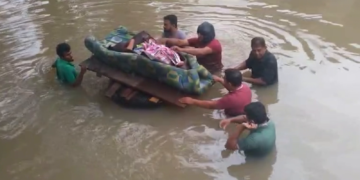

























Sri Lanka Faces Catastrophic Flooding Amid Cyclone Ditwah
Severe flooding in Sri Lanka, triggered by Cyclone Ditwah, has left a devastating impact on the island nation, claiming over 400 lives and displacing countless families. As the government navigates its response, the human toll underscores a deeper crisis in an area already beset by tragedy.
Why It Matters
The catastrophic flooding exacerbates the ongoing challenges faced by Sri Lanka, which is still recovering from various crises, including a significant economic collapse. The effects of the cyclone and ensuing floods are felt not only in physical devastation but also emotionally among the people navigating the aftermath. The response from the authorities will be closely scrutinized as communities rally to recover.
Key Developments
- Over 400 fatalities reported due to flooding linked to Cyclone Ditwah.
- Significant damage observed in both urban and mountainous regions, unlike the tsunami of 2004, which primarily affected coastal areas.
- Criticism directed at the government for its delayed response in declaring an emergency and providing aid to those affected.
- Rescue efforts have been bolstered by the arrival of aid from India and Pakistan, including helicopters and cargo planes.
- Bodies continue to be recovered from landslides, further complicating the rescue and recovery operations.
Full Report
A Community in Crisis
On the outskirts of Colombo, residents like Asiri are grappling with the immediate consequences of the flooding. After spending five days trapped upstairs to escape the rising water, he is now faced with the daunting task of assessing the damage to his home. The height of the floodwaters left a mark on the wall, indicating how severely his living space was impacted. “There was no power, no water—it all broke,” he remarked, illustrating the scale of the destruction.
Desperate Measures
Asiri’s uncle, Sunil, took extraordinary measures to ensure his brother’s safety, constructing a makeshift raft to transport him to the hospital. This situation reflects the desperate circumstances faced by many across the country, where improvisation has become a necessity for survival. Unlike other natural disasters, this flooding has permeated urban areas, amplifying its impact.
Critiques of Government Response
While neighboring countries have started providing assistance, criticisms have arisen regarding the government’s slow action in both declaring a state of emergency and mobilizing resources for relief efforts. As communities struggle with the immediate aftermath, the effectiveness of the government’s response and its implications for future disaster management are under intense scrutiny.
Context & Previous Events
Sri Lanka has a history of dealing with natural disasters, having experienced a devastating tsunami in 2004 that resulted in the loss of around 35,000 lives. The island is currently facing one of the worst natural disasters in its history, coming on the heels of an economic crisis that has strained its resources and response capabilities. Each passing year of extreme weather appears to intensify, posing significant challenges for governmental and humanitarian responses in the region.