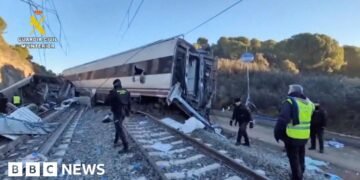























Tragedy Strikes: Collision of High-Speed Trains in Southern Spain
A catastrophic collision between two high-speed trains in southern Spain has resulted in at least 40 fatalities, prompting a nationwide investigation and three days of mourning announced by Prime Minister Pedro Sanchez. The incident, which unfolded on a straight stretch of track near Córdoba, has sent shockwaves through the nation as rescue efforts continue.
Why It Matters
This disaster marks the deadliest rail accident Spain has experienced in over a decade, raising critical questions about rail safety in a country renowned for its extensive high-speed train network. With more than 120 individuals injured, the implications for public confidence in rail travel and emergency response effectiveness are significant.
Key Developments
- Collision Details: The accident occurred at 19:45 local time on Sunday as a Madrid-bound train derailed and collided with an oncoming train.
- Initial Findings: Investigators have discovered what appears to be a faulty joint on the tracks, which may have contributed to the accident.
- Rescue Operations: Emergency services continue to work at the scene, facing challenges due to the twisted wreckage.
- National Mourning: Prime Minister Sanchez declared three days of mourning for the victims, emphasizing the need for transparency in uncovering the truth behind the collision.
- Ongoing Investigation: Transport Minister Óscar Puente indicated that a thorough investigation could take a month, seeking to ensure accurate conclusions are reached.
Full Report
The Collision
The tragic incident took place near Adamuz when a train traveling north from Málaga to Madrid derailed around an hour after departure. As reported, its derailment led to a head-on collision with a second train, which was headed south from Madrid to Huelva. The impact caused severe damage, pushing several carriages into an embankment. Rescuers noted that the front carriages of the second train sustained the most casualties.
Rescue Efforts
With around 400 passengers and crew members aboard both trains, emergency teams have been working relentlessly to free trapped individuals. Emergency services have treated 122 people, with 41 currently hospitalized, including some in critical condition. Witness accounts describe a scene of chaos, with cries for help echoing amidst the devastation.
Official Responses
Prime Minister Sanchez, who visited the crash site alongside other officials, expressed deep sorrow over the tragedy, vowing to investigate the causes with full transparency. He commented that this day is marked by collective grief across Spain. Meanwhile, King Felipe VI and Queen Letizia also expressed their condolences and concern regarding the situation.
Transport Minister Puente described the situation as "extremely strange" and stressed the importance of understanding the root cause behind the collision. Reports from unnamed sources suggest that a key rail joint may have been faulty, although it remains unclear if this defect directly caused the accident.
Context & Previous Events
Spain previously experienced its worst high-speed rail disaster in 2013, when a derailment in Galicia resulted in 80 deaths and over 140 injuries. This incident serves as a stark reminder of the critical importance of rail safety oversight, especially in a country that boasts one of the largest high-speed rail networks in the world, spanning over 4,000 kilometers (2,485 miles).