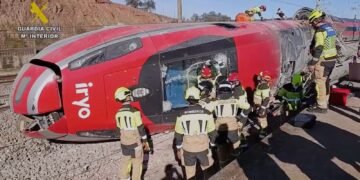























Fatal High-Speed Train Crash in Spain: Death Toll Rises
A tragic high-speed train collision in Spain’s Cordoba province has now claimed at least 41 lives, with authorities warning that this number could increase as recovery efforts continue. Emergency services are at the scene, where cranes are set to move wreckage and search for additional victims among the debris.
Why It Matters
This catastrophic event highlights the critical importance of railway safety and infrastructure reliability in a country renowned for its advanced train system. With a record of low rail fatalities, this accident raises concerns about maintenance and oversight along Spain’s railway lines.
Key Developments
- The death toll has reached 41, with more bodies expected to be recovered as recovery efforts progress.
- At least 43 individuals remain unaccounted for, based on family reports to police.
- A total of 159 people were injured, with 39 still hospitalized as of Tuesday morning.
- The crash occurred near Adamuz, approximately 230 miles south of Madrid, involving two trains traveling at speeds of about 130 mph.
- Preliminary investigations suggest a faulty rail joint may have contributed to the derailment.
Full Report
Incident Overview
The fatal incident occurred on Sunday when a train traveling from Malaga to Madrid derailed and subsequently collided with another train en route from Madrid to Huelva. This collision resulted in the loss of life, including that of the 27-year-old driver, as reported by El Pais. Emergency response teams have been working tirelessly to manage the crisis and attend to the injured.
Ongoing Investigation
Authorities are investigating the cause of the crash, with many expressing confusion regarding how the first train derailed. Unions had previously raised concerns about the condition of track infrastructure before it was upgraded at significant cost earlier this year. Marta Fernandez Heredia, the head of Renfe, Spain’s national railway, has asserted that human error has been ruled out. Spain’s Transport Minister, Oscar Puente, referred to the incident as "truly strange," given that it occurred on a flat section of track.
Eyewitness Accounts
Passengers have recounted harrowing experiences during the crash, describing it as akin to an "earthquake." Some survivors made decisions that potentially saved their lives, such as moving to less affected carriages just moments before impact. One survivor, Lola Beltran, noted that she changed her seat just before the crash, while Bianca Birleanu detailed her terrifying experience of the carriage collapsing around her.
Royal Attention
As the nation mourns, King Felipe and Queen Letizia are scheduled to visit the crash site along with Prime Minister Pedro Sanchez. This tragedy is a stark reminder of the vulnerabilities within Spain’s rail system, despite its reputation for safety.
Context & Previous Events
Spain’s rail safety record has been among the best in Europe, with 18 deaths reported in rail incidents in 2024. The deadliest railway accident in recent Spanish history occurred in July 2013 in Santiago de Compostela, where 79 people lost their lives in a railway derailment.