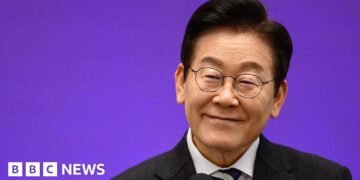























South Korean President Proposes National Coverage for Hair Loss Treatments
In a surprising move, South Korean President Lee Jae Myung is advocating for national health insurance to cover hair loss treatments. This proposal has sparked a mixed response among the public, particularly given the country’s stringent beauty standards and the stigma surrounding baldness.
President Lee’s suggestion marks a significant shift in the perception of hair loss treatments in South Korea, framing them as a vital health issue rather than merely cosmetic. As the nation grapples with issues of mental health and self-image among its youth, the implications of this proposal may extend far beyond physical treatments.
Key Developments
- President Lee proposes that national health insurance cover hair loss treatments, traditionally deemed cosmetic.
- Current policies exclude hereditary hair loss from coverage, as it is not considered life-threatening.
- The proposal has garnered praise and skepticism on social media, with some seeing it as a strategic move for electoral gain.
- Concerns arise over the financial sustainability of the national health insurance system, which is already facing significant deficits.
Full Report
Healthcare Coverage for Hair Loss
During a recent briefing, President Lee urged officials to consider covering treatments for hair loss under the national health insurance scheme. He argued that societal views have shifted, and what was once seen as a cosmetic decision is now viewed as essential for mental well-being. “Is it just a matter of defining hereditary disease as a disease?” Lee questioned during the meeting, highlighting the debate on the classification of such conditions.
Public Reactions
The proposal has elicited a mixed response from the public. While some individuals, especially those experiencing hair loss, expressed gratitude for the possibility of subsidized treatments, others viewed the initiative as politically motivated. “Saving money sounds nice, but honestly it costs less than 300,000 won ($200) a year, so… is it even necessary?” stated Song Ji-hoon, a young Seoul resident.
Stigma Surrounding Hair Loss
In South Korea, where beauty standards are exceptionally high, baldness carries a significant stigma, especially among young adults. Recent reports indicate that nearly 240,000 people sought medical advice for hair loss last year, with 40% of those being in their 20s or 30s. Affected individuals like 33-year-old Lee Won-woo noted that hair loss has impacted their confidence and ability to present themselves socially.
Financial Implications
Despite calls for increased coverage, critics argue that the national health insurance scheme is already experiencing a record deficit and should prioritize more serious health issues. The Korean Medical Association emphasized that government funds should focus on urgent medical needs rather than cosmetic concerns. The current financial strain of the system may limit the implementation of Lee’s proposal.
Political Backdrop
This campaign is not new for President Lee, as similar proposals were part of his platform during the 2022 presidential elections, where he lost. Many speculate that his renewed focus on youth-related issues, including a recent suggestion to cover obesity drugs under health insurance, is an attempt to attract a younger base ahead of the upcoming local elections.
Criticism and Skepticism
Experts remain skeptical about the feasibility of implementing such a policy. Political analysts suggest that the proposal may merely be a strategic maneuver to appear attuned to the concerns of younger voters. Dr. Lee, a political science professor, expressed doubts about the president’s commitment, highlighting it as a calculated gesture rather than a sincere initiative.
Context & Previous Events
President Lee’s advocacy for hair loss treatment coverage aligns with his political history. The proposal was a rallying point during his previous campaign, where he faced criticism for gimmicky strategies aimed at securing young male voters. Although he has secured the presidency since then, the feasibility and sincerity of his new promises, particularly regarding hair loss treatments, remain under scrutiny.