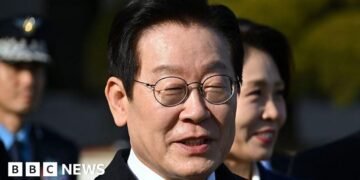























South Korea’s President Lee Jae Myung to Reset Relations with China During Beijing Visit
South Korean President Lee Jae Myung is in Beijing for a pivotal meeting with Chinese leader Xi Jinping aimed at mending strained relations between the two countries. As South Korea’s largest trading partner, China’s cooperation is crucial for Lee, especially in light of ongoing regional tensions and an unofficial Chinese ban on Korean cultural exports.
Why It Matters
This visit marks the first by a South Korean leader to China since 2019, underlining the need for South Korea to navigate its complex ties with both Beijing and Tokyo. With geopolitical tensions rising, particularly concerning Taiwan, the outcomes of this summit could significantly reshape alliances and economic partnerships in Northeast Asia.
Key Developments
- Lee is set to meet Xi Jinping and other Chinese leaders to discuss bilateral relations and regional security.
- The meeting comes amid heightened tensions between China and Japan over Taiwan.
- Lee’s agenda includes discussions on North Korea’s nuclear threats and China’s restrictions on Korean pop culture.
- Lee aims to promote a cooperative relationship while also planning a visit to Japan later this month.
Full Report
Diplomatic Engagement
Lee’s trip signals a significant diplomatic engagement with China, a country he seeks to reassure about South Korea’s commitment to maintaining balanced relations. Speaking to Korean residents in Beijing, he noted his hope that the visit would “serve as a new starting point to fill in the gaps in Korea-China relations, restore them to normal, and upgrade them to a new level.”
Security Concerns
Amid existing tensions in the region, security on the Korean Peninsula will feature prominently in discussions. Reports indicate that North Korea has recently tested ballistic missiles, raising alarms for South Korea and its allies. Lee is in need of Chinese assistance in urging North Korean leader Kim Jong Un to abandon his nuclear ambitions.
Cultural Trade Issues
Another pressing issue is China’s informal ban on South Korean pop culture, affecting K-pop and K-dramas. While Beijing hasn’t officially acknowledged any prohibition, many believe the restrictions are a reaction to South Korea’s deployment of a U.S. anti-missile system in 2016. Lee intends to advocate for lifting these barriers as they pose a significant economic concern for South Korean entertainment industries.
Maritime Tensions
In addition to these topics, Lee aims to address Beijing’s construction of maritime structures in contested waters, which have raised security alarms in Seoul. While China claims these are fish-farming facilities, South Korea views them as a potential military threat.
Context & Previous Events
This engagement follows a period of deteriorating relations under former President Yoon Suk Yeol, who took a critical stance towards China. It also comes amid a complicated diplomatic landscape, as South Korea balances its alliances with both the U.S. and Japan. Lee’s upcoming visit to Japan later in the month shows a commitment to fostering cooperation across regional powers while managing the complex relationship with China.