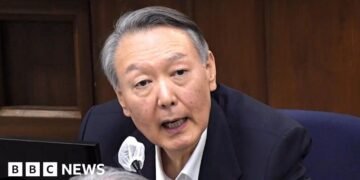























South Korea’s Former President Yoon Suk Yeol Sentenced to Five Years for Abuse of Power
South Korea’s impeached leader Yoon Suk Yeol has been sentenced to five years in prison following his conviction for abuse of power, obstructing justice, and falsifying documents related to his controversial martial law declaration in 2024. This verdict marks a critical moment in a series of trials that have rocked the nation, highlighting deep political divisions and questions about government accountability.
Why It Matters
The sentencing of Yoon Suk Yeol is significant not only because it represents a landmark judicial outcome for a former president but also due to its implications for South Korea’s political landscape. Yoon’s actions, which led to widespread protests and a political crisis, have polarized public opinion, exposing rifts within society that are likely to influence future elections and governance.
Key Developments
- Yoon was convicted for preventing his own arrest using presidential bodyguards and failing to consult his entire cabinet before declaring martial law.
- The judge emphasized Yoon’s lack of remorse, which may influence outcomes in his upcoming trials, including a more serious insurrection charge for which prosecutors have requested the death penalty.
- Around 100 supporters rallied outside the courthouse during the verdict, indicating Yoon’s continued backing among a segment of the population.
- Both Yoon’s defense and prosecutors have one week to file appeals against the ruling.
Full Report
A Conviction for Abuse of Power
On Friday, a South Korean court ruled against Yoon, stating that he had erred in declaring martial law without sufficient consultation. The judge noted that Yoon’s actions resulted in a significant political crisis, and his consistent lack of remorse played a critical role in the court’s decision, which was more lenient than the ten-year sentence sought by prosecutors.
Support at the Courthouse
A small group of Yoon’s supporters gathered outside the courthouse to witness the proceedings, some holding banners that read, “Yoon, again! Make Korea great again.” While some voiced their discontent with the judicial outcome, others maintained a solemn demeanor, reflecting the divided opinions surrounding Yoon’s leadership.
Legal Defense and Future Trials
Yoon has consistently denied the charges against him, claiming that the arrest warrant was invalid and that he was not required to consult every cabinet member when exercising emergency powers. His defense has posited that the investigations lacked legal basis from the start. The upcoming trials will tackle a broader range of accusations, including serious charges of insurrection.
Context & Previous Events
This conviction is the first verdict related to Yoon’s martial law decree, which, although brief, prompted significant national unrest and calls for his removal from office. His attempt to declare martial law led to a decisive electoral victory for opposition leader Lee Jae Myung just six months later, underscoring a shift in voter sentiment. The last former president to face imprisonment, Park Geun-hye, was sentenced to 20 years before being pardoned and released, marking a troubling precedent in South Korea’s political history.