
























U.S. Military Movements Near Mexico Raise Sovereignty Concerns
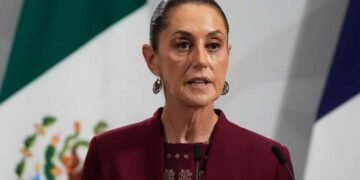
MEXICO CITY — Recent U.S. military operations near Mexico have prompted significant concern within the Mexican government and public. Following warnings from the Federal Aviation Administration regarding flying restrictions over the eastern Pacific, President Claudia Sheinbaum sought to reassure citizens, emphasizing that no military activities would occur over Mexican territory.
Why It Matters
These developments come in the wake of heightened tensions stemming from U.S. military actions in Venezuela and ongoing discussions about combating drug cartels in Mexico. The situation underscores the delicate balance of sovereignty and cooperation between the two nations, especially regarding security operations that could affect Mexican airspace and autonomy.
Key Developments
- FAA Advisory: The U.S. Federal Aviation Administration suggested U.S. aircraft operators exercise caution in regions near Mexico due to unspecified military activities.
- Presidential Assurance: President Sheinbaum stated her administration received written confirmation that U.S. military flights would not occur over Mexican territory.
- Social Media Buzz: Images of a U.S. military plane at Toluca airport fueled speculation, prompting inquiries from politicians about the legality of such operations.
- Logistical Explanation: Sheinbaum clarified that the U.S. plane’s landing was part of a training operation authorized by Mexico’s Secretary of Defense, thus bypassing the need for Senate approval.
- Ongoing Collaboration: Both Mexico and the United States continue to discuss cooperative security measures, reaffirming Mexico’s stance on protecting its sovereignty.
Full Report
Military Operations and Diplomatic Communication
On Monday, President Sheinbaum addressed apprehensions regarding U.S. military movements after the FAA issued advisories suggesting caution for aircraft in the Pacific region. She highlighted that the U.S. government had not provided early notification of any military initiatives.
In response to the FAA’s advisory, U.S. officials shared specific coordinates of their military activities, leading Mexican authorities to clarify that these operations did not pose risks for Mexico. However, the emergence of a U.S. military transport at Toluca airport raised questions within the Mexican Senate, which traditionally oversees the deployment of troops.
Response from Mexican Leadership
In her remarks, Sheinbaum characterized the U.S. military aircraft’s arrival as a routine logistical operation for training personnel, authorized at a high level. Her security cabinet reiterated the action’s compliance with established protocols and bilateral agreements between the two nations.
Security Discussions Continuing
Despite the backdrop of military operations, both governments remain committed to collaborating on security issues. Sheinbaum and U.S. President Trump discussed these matters in recent conversations, aiming to strengthen joint efforts against drug trafficking and illicit arms flow across borders. Upcoming meetings between security officials from both nations are intended to yield actionable strategies for combating these challenges.
Context & Previous Events
The situation reflects not only the direct implications of U.S. military operations in the region but also the ramifications of recent U.S. interventions, such as the attempt to capture former Venezuelan President Nicolás Maduro. This context adds urgency to discussions about drug cartels operating in Mexico, further complicating the security landscape between the two nations.