
























Scientists Discover Evidence of Lightning on Mars
CAPE CANAVERAL, Fla. — In a groundbreaking discovery, researchers have detected what may be lightning on Mars, using data gathered by NASA’s Perseverance rover. This revelation not only stimulates scientific curiosity but also opens new avenues for understanding the Martian environment.
Key Points / What’s New
- Research team identified 55 instances of “mini lightning” during Martian dust storms.
- Electrical discharges were detected through a microphone on the Perseverance rover.
- This marks a significant step in the search for electrical activity on Mars, a quest ongoing for 50 years.
Details of the Findings
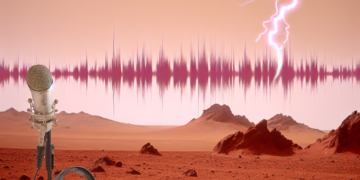
The Perseverance rover’s onboard microphone recorded electrical discharges, described as “mini lightning,” during turbulent weather events known as dust storms and dust devils. Over two years on Mars, the research team documented these discharges, which are unusually small, measuring just inches across and occurring within 6 feet of the rover.
These discharges produced crackling sounds, comparable to static electricity on Earth, clearly audible amid the windswept Martian landscape. Lead researcher Baptiste Chide highlighted that the phenomenon opens new investigative opportunities in Martian science, potentially revealing chemical interactions resulting from the electrical activity.
Nevertheless, experts emphasize caution regarding the interpretation of these findings. Daniel Mitchard from Cardiff University noted that the evidence, while compelling, is derived from a single instrument not originally designed to measure lightning. The sounds of the discharges offer a tantalizing hint but require further verification through additional instruments in future missions.
Scientific Implications
The discovery adds to an expanding understanding of Martian weather, with electrical activity already confirmed on planets like Jupiter and Saturn. The Perseverance team’s analysis involved 28 hours of acoustic recordings, finding that discharges from fast-moving dust devils lasted only a few seconds, whereas those from dust storms could endure for up to 30 minutes.
Chide likened the Martian phenomenon to an Earth thunderstorm, albeit much less visible and manifesting as faint electrical zaps. He explained that the thin atmosphere on Mars, rich in carbon dioxide, tends to muffle sound, rendering some occurrences barely perceptible.
Despite the excitement surrounding this discovery, Mitchard reassured that the likelihood of a human encountering lethal lightning on Mars is extremely low. However, he warned that the persistent static-like discharges could pose risks to sensitive equipment in future explorations.
Background
Scientists have pursued the existence of electrical activity on Mars for decades, building on prior suspicions about its atmospheric behavior. Perseverance, which has been operational since 2021, has focused on a dry river delta, collecting rock samples aimed at finding signs of ancient microbial life. However, the planned return of these samples to Earth is currently postponed as NASA explores more cost-effective options.