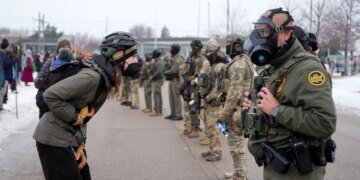























Minnesota Schools Cancel Classes Amid ICE-Related Unrest
In response to recent unrest following the police shooting of a woman by a federal agent, several schools across Minnesota have canceled classes. This significant action underscores mounting tensions within the community and growing opposition to U.S. Immigration and Customs Enforcement (ICE) operations in the region.
Why It Matters
The fatal incident has spurred widespread outrage, raising concerns about the safety of students and communities amid increased federal immigration enforcement. Activists and educators are calling for the withdrawal of federal agents from school environments, reflecting deeper anxieties about the intersection of immigration policy and public safety. The situation highlights ongoing debates about law enforcement’s role in educational settings.
Key Developments
- Fridley Public Schools and Columbia Heights Public Schools opted for remote learning Friday as tensions erupted post-shooting.
- Minneapolis Public Schools canceled in-person classes starting Thursday and continuing through the week.
- Activists demand ICE’s removal from schools, emphasizing the urgent need for safety within educational institutions.
- A federal agent shot Renee Nicole Good, described as self-defense, leading to protests and calls for justice.
Full Report
The unrest ignited after the fatal shooting of Renee Nicole Good by an ICE agent on Wednesday. Good was reportedly involved in an incident where she allegedly drove toward the agent, prompting a response that resulted in her death. Following this event, protests erupted in the Twin Cities, leading to heightened security concerns in local schools.
Catina Taylor, president of the Educational Support Professionals Chapter of the Minneapolis Federation of Educators, vehemently criticized ICE’s presence, advocating for their complete withdrawal from school environments. “We need ICE out of Minneapolis now,” she declared during a press conference. “Since arriving, ICE has been a dangerous and out-of-control force putting every Minnesotan in danger.”
In addition to school closures, the incident saw ICE agents deploying a chemical irritant outside Roosevelt High School and detaining staff, escalating fears among students and educators alike. “A mother was murdered, an elementary school was forced to lock down,” Taylor said, emphasizing the detrimental impact on community safety.
Homeland Security officials defended the operation, stating that ICE does not enter schools unless there is a direct threat to public safety. Assistant Secretary Tricia McLaughlin noted that law enforcement pursued a suspect who posed a threat and only responded in areas where safety was compromised.
As schools shifted to alternative learning models, Governor Tim Walz called for a “Day of Unity” on Friday to honor Good and address community tensions. He called for a moment of silence, emphasizing the need for solidarity in the face of violence.
Context & Previous Events
The tensions in Minneapolis come amid a surge of over 2,000 federal agents deployed to the region for intensified immigration enforcement. This escalation, coupled with the tragic events surrounding Good’s death, has prompted immediate action from local education officials and community leaders.






