






















South Korea’s Youth Embrace Anti-Government Sentiment Amid Changing Political Landscape
In a dramatic shift, South Korea’s youth are rallying behind the imprisoned former president Yoon Suk Yeol, mirroring trends in far-right movements worldwide. Mobilized by the Freedom University group, these young protesters are rejecting conventional party politics in favor of a burgeoning anti-government stance.
Why It Matters
As South Korea grapples with stagnating economic growth and rising dissatisfaction among its youth, the emergence of right-wing groups exacerbates political polarization. This growing movement indicates not only a generational divide but also a potential transformation in the country’s political fabric, driven by economic despair and a desire for change.
Key Developments
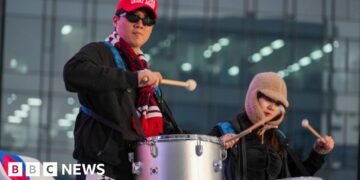
- Thousands of young South Koreans, led by Freedom University, attended rallies in support of Yoon, despite his imprisonment for insurrection.
- Participants view Yoon not as a failed leader but as a symbol of defiance against what they perceive as corrupt governance.
- Freedom University has rapidly mobilized support through social media, echoing themes from American right-wing movements.
- Youth dissatisfaction is driven by economic struggles, with many feeling neglected by the ruling Democratic Party.
Full Report
The Rise of Freedom University
Freedom University, a right-wing youth organization led by student Park Joon-young, has gained traction among disillusioned young South Koreans. Established in response to a perceived corruption among left-leaning governments, the group advocates for policies it believes will benefit the youth. Their slogan, "Korea for Koreans," taps into Sinophobic sentiments that are increasingly prevalent.
Park, 24, stated that while Yoon was not a favored figure during his presidency, his recent actions have made him a martyr in the eyes of his supporters. "When Yoon was elected, it wasn’t so much joy over his victory as it was relief over the loss of a left-wing candidate," he explained.
Young Protesters and Economic Concerns
Many attendees of the rallies express frustration over economic conditions, including poor job prospects and low home ownership rates. A recent survey indicated that nearly 75% of young South Koreans believe the economy is in decline compared to their parents’ generation. These economic pressures have fueled anti-government sentiments, with many blaming the prolonged rule of the Democratic Party for failing to deliver on critical issues like housing and employment.
The protests have also seen an increase in anti-Chinese rhetoric, with participants accusing Chinese nationals of electoral malfeasance—claims that the government has strongly contested.
Social Media Strategies
Freedom University has effectively utilized social media platforms to amplify its message and grow its following, focusing on popular apps among young adults like Instagram and YouTube. This has allowed them to reach a wider audience, attracting young people who feel disconnected from the mainstream political discourse. Their aggressive online campaigns have contributed to growing attendance at rallies, allowing them to establish a visible presence in urban centers like Seoul.
Context & Previous Events
Last December, Yoon sought to regain political control by declaring martial law, which was met with widespread public resistance. His subsequent impeachment and trial for insurrection marked a significant political downturn, yet his imprisonment has galvanized support among a select group of youth. The economic stagnation experienced by young South Koreans further exacerbates their grievances against the Democratic Party, reflecting broader issues that may shape future political landscapes in the country.