






















Limited Access Granted at Rafah Crossing: A Glimmer of Hope for Gazans
As the Rafah border crossing between Gaza and Egypt opened briefly for limited traffic, a small group of patients with urgent medical needs found the opportunity to seek care unavailable in their besieged territory. This development marks a crucial, albeit modest, breakthrough amid ongoing humanitarian crises exacerbated by Israel’s stringent security measures.
Why It Matters
The Rafah crossing is the only exit from Gaza that does not lead to Israel, making it a critical lifeline for Gazans seeking medical treatment and a chance to return home. With the crossing now partially operational, there is renewed hope for many who have been awaiting assistance for extended periods, despite the limited number of individuals allowed to cross.
Key Developments
- Limited Patient Transfers: On the first day of reopening, only a handful of seriously ill patients made the journey from Khan Younis to Egypt.
- Strict Approval Process: Out of 27 patient applications submitted by medical professionals in Gaza, only five were approved by Israeli authorities.
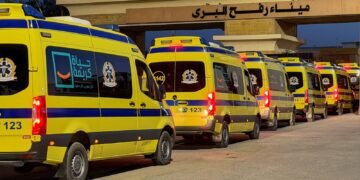
- Ambulance Preparedness: Egyptian ambulances were on standby, ready to transport patients to hospitals equipped to handle their complex health needs.
- Ongoing Humanitarian Need: With many thousands requiring medical attention, the number of transfers is expected to rise but will remain significantly low.
Full Report
A Modest Opening
After nearly a full day of anticipation, the Rafah border crossing finally resumed operations, allowing a select few individuals to pass through. As dusk approached, ambulances positioned on the Egyptian side sprang into action, ready to receive patients. This reopening symbolizes hope for many, even as only a small fraction of those in need found relief on this initial day.
Medical Transfers and Challenges
Among those who crossed were a limited number of patients from Khan Younis, accompanied by two companions. Each individual underwent thorough checks before being carefully transported into waiting ambulances. The director of the Nasser Medical Complex expressed concern over the restrictive nature of the approval process, pointing out that Israel had approved only five of the 27 requests submitted for patients needing urgent medical care.
Impediments to Assistance
Israeli officials have not publicly clarified the reasons behind the rejections of numerous applications, but it appears that extensive security protocols are contributing to the prolonged wait times for those attempting to utilize the crossing. Although it is anticipated that the volume of individuals crossing might increase in the coming days, the anticipated figures will still fall short of addressing the overwhelming medical demands in Gaza.
Context & Previous Events
The Rafah crossing has historically served as a critical outlet for Gazans, especially in times of crisis. Its operational significance is heightened by the current devastation faced by medical facilities in Gaza, where many individuals are unable to receive the care they require. The opening of Rafah, even under stringent conditions, is viewed as a small yet significant step forward in addressing the ongoing humanitarian needs of the Gazan population.