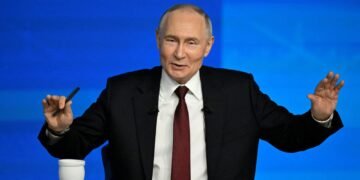























In his annual end-of-year televised address, President Vladimir Putin encapsulated the tensions surrounding Russia’s ongoing war in Ukraine and domestic discontent. Over a marathon four-and-a-half hours, he asserted control while addressing the public’s pressing issues, signaling that peace remains elusive.
Putin’s comments come at a critical juncture, as the conflict has entered its fourth year, straining both military resources and the Russian economy. His insistence that any peace deal must address the “root causes” of the war reflects his unwillingness to compromise, further complicating the path forward in negotiations with Ukraine.
Key Developments
- Putin’s televised address was broadcast on all major Russian channels, highlighting his grip on public communication.
- The first question from the public focused on the timing of peace, to which Putin offered no optimism.
- He blamed Ukraine for the lack of settlement, claiming the onus is now on Kyiv.
- Putin criticized the European Union for funding Ukraine rather than utilizing frozen Russian assets, calling it “daylight robbery.”
- During the address, news of a Ukrainian drone attack on a Russian oil tanker broke, undermining Putin’s assertions of military superiority.
- Public sentiment appeared critical, with one viewer describing the event as “not a direct line but a circus.”
- Rising costs of living and economic stagnation were significant concerns among citizens during the Q&A session.
Full Report
Putin’s Address and Public Sentiment
Vladimir Putin’s annual address aimed to reassure Russians of his leadership amid a backdrop of war. The event, dubbed “Primetime Putin,” reiterated his commitment to controlling the narrative. However, the tone of public questions indicated skepticism about his assurances. Citizens raised legitimate concerns about the rising cost of living and stagnant wages, reflecting broader economic issues that seem to overshadow the government’s messaging.
Peace Prospects
When questioned about the timeline for peace, Putin’s response lacked a constructive path forward. He maintained that Russia desires peace but dismissed immediate optimism, insisting that any agreement must first tackle the underlying issues that sparked the conflict. This assertion places the blame on Ukraine, intensifying existing divides and signaling a prolonged stalemate.
International Relations
In his remarks, Putin took a shot at the EU’s financial strategy concerning Ukraine, portraying it as a theft of Russian assets and undermining the bloc’s credibility as a safe haven for investments. This commentary reflects the Kremlin’s ongoing frustration with Western support for Ukraine and signals a hardened stance towards future diplomatic efforts.
Military Developments
The address coincided with reports of a significant Ukrainian drone operation targeting a Russian oil tanker in the Mediterranean Sea. This event contrasted sharply with Putin’s claims of military superiority, highlighting the ongoing challenges Russia faces far from the main theater of conflict.
Context & Previous Events
This year’s address followed nearly four years of conflict in Ukraine, with rising military and economic pressures on Russia. Putin’s reluctance to modify his position, coupled with public dissatisfaction, suggests a precarious balancing act for the Kremlin as it navigates both domestic and international landscapes.