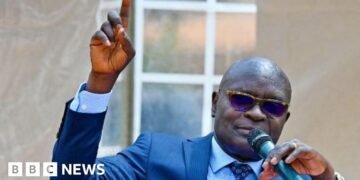























The head of Uganda’s electoral commission has vowed to resist intimidation ahead of Thursday’s presidential election, following threats regarding the potential outcome of the vote. Simon Byabakama’s steadfast stance comes amidst growing concerns over political pressure and the existing climate of fear surrounding the electoral process.
The nature of electoral integrity is at stake in Uganda, where long-time President Yoweri Museveni seeks a seventh term. As the commission prepares to navigate threats against its independence, the situation highlights the challenges opposition candidates face in a political environment marked by repression and control.
Key Developments:
– Byabakama received threats related to declaring winners of the election, specifically in reference to opposition candidate Robert Kyagulanyi, known as Bobi Wine.
– He asserted that the law, not threats or personal agendas, would dictate the election outcome.
– Security forces are deployed to maintain order, but their presence raises concerns among voters.
– Authorities restricted internet access across Uganda to combat misinformation, amplifying fears of voter oppression.
**Byabakama’s Response**
Simon Byabakama responded to inquiries regarding threats he has faced, asserting he will not succumb to intimidation from unnamed senior officials. “I am not in the business of donating votes,” he emphasized, pointing towards the electoral commission’s independence. His comments followed the emergence of a video in which a presidential assistant dismissed the possibility of declaring Bobi Wine as the winner, stating, “Don’t waste our time.”
**Legislative Guardrails**
Byabakama maintained that only the will of voters and the existing laws will shape the election results. He reiterated that a candidate must secure more than 50% of the total valid votes to be declared president. “It is the voters who determine how many votes a candidate gets,” he noted. He committed to announcing results within 48 hours of polling’s conclusion.
**Security Concerns**
Addressing the heavy military presence around polling stations, Byabakama stated its presence is intended to uphold peace during the electoral process. However, he acknowledged complaints regarding polling stations situated within military compounds and pledged a thorough investigation should these reports prove accurate.
**Internet Restrictions**
In a controversial move, authorities enacted a nationwide internet blackout to mitigate potential electoral fraud and misinformation. This action, characterizing heightened control over communication, has drawn criticism and is viewed as a disturbing indication of increasing repression as the election draws near, according to the UN Human Rights Office.
**Context & Previous Events**
The upcoming election is critical as President Yoweri Museveni, who has held power for nearly four decades, faces off against Bobi Wine, a popular opposition figure who previously finished as the runner-up in the 2021 elections. Despite growing public support for the opposition, the electoral landscape has seen enhanced restrictions on dissent, including the detention of activists and police interference at rallies.