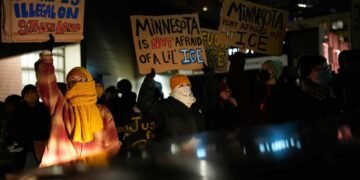























Protests Erupt After Fatal Shooting of Woman by ICE Officer in Minneapolis
A recent shooting incident involving an Immigration and Customs Enforcement (ICE) officer in Minneapolis has ignited widespread protests across the city and beyond. The fatal encounter with Renee Good has drawn intense scrutiny of federal immigration enforcement tactics, prompting calls for evidence and public transparency in the investigation.
Why It Matters
The shooting of Good has raised significant questions about the use of force by federal agents during immigration operations. As tensions escalate, this incident not only reverberates in Minneapolis—where community-police relations remain fragile following the killing of George Floyd—but also highlights the broader national debate over immigration enforcement practices under the Trump administration.
Key Developments
- A video surfaced showing the moments leading up to Renee Good’s fatal shooting by ICE officer Jonathan Ross on January 7.
- Minnesota’s Hennepin County Attorney Mary Moriarty urged the public to share any relevant videos or evidence as part of the investigation.
- The shooting coincided with a large-scale immigration crackdown involving over 2,000 federal officers in the Twin Cities, announced as the biggest operation of its kind to date.
- Federal officials maintain that Ross acted in self-defense during the encounter.
- Protests erupted in multiple cities following Good’s death, with hundreds gathering outside federal facilities and voicing their discontent.
Full Report
Shooting Incident and Video Evidence
Renee Good was fatally shot by an ICE officer in Minneapolis while she was in her vehicle. A newly released 47-second video showed the confrontation from Ross’s perspective. Good can be heard expressing that she was not upset with the officer, while her wife, filming from outside the vehicle, described them as U.S. citizens and made dismissive remarks towards Ross. The situation escalated when multiple officers ordered Good to exit her vehicle, which she briefly reversed before driving away, prompting Ross to fire shots.
Following the shooting, Hennepin County Attorney Mary Moriarty emphasized the importance of gathering public evidence, urging witnesses to submit recordings of the incident. “It does not matter that it was a federal law enforcement agent,” she said, asserting that her office retains jurisdiction in the case.
Federal Response and Legal Perspectives
Federal officials, including Vice President JD Vance, defended Ross’s actions, claiming he was protecting himself. However, local leaders, like Minneapolis Mayor Jacob Frey, have rejected such claims as unfounded. Experts in policing have voiced concerns about the circumstances surrounding the shooting, questioning why Ross had a cellphone in one hand while brandishing his firearm in the other.
Community Reactions and Protests
The public response to Good’s death has been immediate and fierce. Crowds gathered outside the site of the shooting, with many expressing outrage reminiscent of the protests that followed the killing of George Floyd in 2020. Following the incident, Minneapolis Public Schools opted to cancel classes out of safety concerns, while protests against immigration enforcement tactics continued to swell throughout the week.
Context & Previous Events
This incident occurs during what the Department of Homeland Security has characterized as the largest immigration enforcement operation to date, involving more than 2,000 federal officers. Renee Good’s death marks at least the fifth death related to immigration sweeps since the Trump administration took office, further fueling debates about the morality and effectiveness of current immigration policies.






