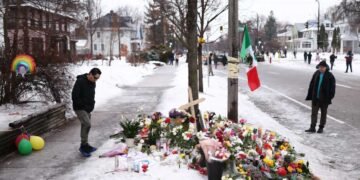























ICE Shooting Sparks Outrage and Protests in Minneapolis
A shooting involving an Immigration and Customs Enforcement (ICE) officer that resulted in the death of 37-year-old Renee Nicole Good has ignited widespread protests and a vigil in Minneapolis. The incident, which has polarized public opinion, raises important questions about the use of force by federal law enforcement and the implications of current immigration policies.
Why It Matters
Good’s tragic death has highlighted a contentious debate surrounding the role of ICE and the tactics employed by its officers in American communities. The differing narratives from political leaders and law enforcement reveal a deepening divide regarding immigration enforcement and the perception of safety among residents. The protests further reflect the community’s broader frustrations with federal immigration policies and their implementation.
Key Developments
- Shooting Incident: Good was fatally shot by an ICE officer while reportedly trying to drive away from a group of agents in an incident that occurred in a residential area of Minneapolis.
- Vigils and Protests: Following the shooting, a vigil was held in her memory, and demonstrations have erupted in Minneapolis and other cities.
- Competing Narratives: Homeland Security Secretary Kristi Noem described the officer’s actions as self-defense, while Minnesota Attorney General Keith Ellison characterized Good as a compassionate neighbor who was advocating for her immigrant community.
- Investigation: The FBI is now leading the investigation into the shooting, with the Minnesota Bureau of Criminal Apprehension withdrawn from the inquiry, raising concerns about transparency and public trust.
Full Report
Incident Details
Renee Nicole Good was killed on Wednesday when an ICE officer opened fire as she attempted to leave the scene in her vehicle. According to local police, they responded to calls about shots fired around 9:30 a.m. Officers at the scene were reportedly handling a vehicle stuck in the snow when protesters began to gather.
Witness accounts suggest that Good received conflicting orders from ICE agents; one instructed her to drive away while another wanted her to exit her SUV. Video evidence shows Good’s vehicle in a position that obstructed the road, with officers approaching from different sides.
Official Reactions
Following the incident, Secretary Noem stated that the officer followed appropriate protocol and referred to Good’s actions as "an act of domestic terrorism." However, this assertion was met with sharp criticism from local leaders. Minneapolis Mayor Jacob Frey dismissed Noem’s claims, describing the officer’s actions as reckless and calling for the withdrawal of ICE from the city.
Governor Tim Walz expressed anger towards the situation, linking it to broader federal policies under the Trump administration that have intensified ICE’s presence in urban areas. He criticized the approach as a form of governance that incites fear and conflict.
Investigation Updates
In the aftermath, the FBI has taken over the investigation, which some local officials, including Attorney General Ellison, question for potential bias given the federal agency’s ties to ICE. Initial responses from law enforcement indicated that the situation escalated quickly, resulting in shots fired but lacked clarity on the precise circumstances leading to the deadly encounter.
Context & Previous Events
The shooting occurred in a location historically linked to high-profile police incidents, notably near where George Floyd was killed in May 2020. This recent tragedy echoes ongoing discussions about police accountability and the use of deadly force in law enforcement, particularly as tensions rise over immigration enforcement strategies that disproportionately affect immigrant communities. The community’s response reflects a growing anger over federal policies perceived as aggressive and harmful to local residents.






