






















Ceasefire Between Syrian Government and SDF Signals Change in Northeast Syria
Syria’s government has announced a new ceasefire agreement with the Kurdish-led Syrian Democratic Forces (SDF) following the latter’s withdrawal from a camp housing thousands of individuals alleged to be connected to the Islamic State (IS). This development comes amid rising tensions and calls for better coordination among international forces involved in the region.
Why It Matters
The ceasefire agreement marks a significant shift in the dynamics of control in northeast Syria, a region previously held by the SDF with support from the U.S. The potential for increased integration between the SDF and the Syrian government could reshape the future of governance and security in a country long plagued by civil war and sectarian violence. The development raises questions about the future of IS detainees and the stability of the region amid growing international indifference.
Key Developments
- Syria’s government and the SDF have established a ceasefire, allowing for talks on the future of Hassakeh province.
- The SDF expressed it was "compelled" to withdraw from al-Hol camp due to a lack of international support for managing IS-linked detainees.
- The ceasefire aims to integrate the SDF’s areas of control into the Syrian state without direct military intervention from government forces in Kurdish cities.
- The Syrian interior ministry accused the SDF of acting unilaterally while stating it would maintain security in the region.
- The U.S. has urged all parties to exercise restraint and focus on civilian protections.
Full Report
Ceasefire Agreement
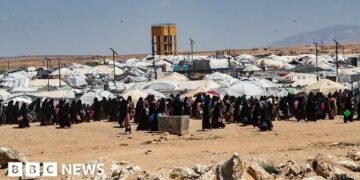
In a notable development, Syria and the SDF have reached an agreement to halt hostilities, which had escalated over the past two weeks. After the SDF withdrew its forces from the al-Hol camp, which houses around 20,000 individuals with alleged IS links, the Syrian interior ministry claimed that the withdrawal occurred without any prior coordination, highlighting tensions between the two parties.
The SDF’s retreat is attributed to what they described as "international indifference" towards the plight of IS militants and their families. In a statement, SDF commander Mazloum Abdi called on the U.S.-led coalition to uphold its responsibilities in providing necessary security measures, emphasizing the importance of safeguarding Kurdish regions.
Security Concerns
As government forces advanced in the Hassakeh province, they made significant territorial gains, taking control of key areas, including Deir al-Zour and Raqqa. The SDF has accused government forces of launching attacks on its facilities and has reported a significant escape of suspected IS fighters from its prisons during recent clashes.
In response, government officials have noted their readiness to assume control of the camps where suspected IS fighters are detained, a move that raises concerns about the future security of these individuals, particularly given the complex geopolitical landscape.
U.S. Monitoring Developments
The United States has been closely observing the evolving situation, conveying concern while urging a focus on civilian safety. U.S. Special Envoy Tom Barrack has indicated that the rationale for U.S. support for the SDF is shifting, now prioritizing facility security over previous military collaborations.
Context & Previous Events
Historically, the SDF has played a crucial role in combating the IS threat, assisted by U.S. air and ground support during the civil war that has lasted over a decade. The SDF previously announced it was detaining about 8,000 suspected IS fighters and around 34,000 individuals with IS connections were held at the al-Hol and Roj camps.
The backdrop of these recent developments includes escalating sectarian violence and a deeply divided Syria following the removal of President Bashar al-Assad in 2024. Interim President Ahmed al-Sharaa aims for national reunification, but achieving lasting peace remains a formidable challenge amidst ongoing conflicts and shifting allegiances.