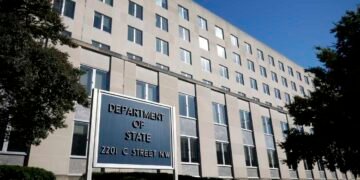























State Department Directs Visa Rejections for Applicants Linked to Content Moderation
The U.S. State Department has issued a directive to its personnel, instructing them to reject visa applications from individuals involved in what the Trump administration deems "censorship" of American speech. This controversial memorandum focuses particularly on H-1B visa applicants, a category often utilized by tech companies and associated sectors.
Why It Matters
This directive raises significant concerns regarding free speech and the role of content moderation in the technology sector. It signals a stark shift in immigration policy that could affect skilled workers across various industries, further complicating the already contentious landscape surrounding social media and free expression.
Key Developments
- The internal memo, distributed on Tuesday, highlights a renewed focus on H-1B visa applications, aimed at individuals who have engaged in fact-checking or content moderation.
- Applicants identified as having participated in activities aimed at curbing "protected expression" may be deemed ineligible for visas.
- This directive aligns with a policy introduced in May by Secretary of State Marco Rubio, targeting visa issuance to those accused of censoring American citizens.
- The memo encourages consular officers to scrutinize applicants’ work histories, including their contributions to trust and safety in various sectors.
- Experts in First Amendment rights have criticized this initiative as both incoherent and unconstitutional, asserting that moderating content does not equate to censorship.
Full Report
Directive Details
The memo explicitly instructs consular officers to investigate visa applicants’ backgrounds through their resumes, LinkedIn profiles, and media appearances. The aim is to identify involvement in combating misinformation, content moderation, and compliance efforts deemed contrary to American values.
Industry Reactions
Alice Goguen Hunsberger, a professional with experience in trust and safety at tech firms, expressed alarm at the conflation of trust and safety work with censorship. She emphasized the critical and life-saving roles these positions serve, which strive to protect communities against fraud and abuse. "Bad actors that target Americans come from all over the world," she stated, advocating the need for a diverse workforce to safeguard online spaces.
Official Statements
A spokesperson for the State Department, who requested anonymity, stated that the administration prioritizes Americans’ freedom of expression while asserting that foreign workers should not come to the U.S. to act as censors. The spokesperson referenced previous incidents that affected former President Trump, framing the new policy as a protective measure for U.S. citizens against external influence.
Expert Critique
Scholars and legal experts have voiced strong opposition to the memo’s implications. Carrie DeCell, a senior staff attorney at the Knight First Amendment Institute, described the memo’s guidance as a potential violation of free speech rights. She asserted that efforts in misinformation research and content moderation are crucial to the protections the First Amendment guarantees.
New Social Media Requirements
In an additional announcement, the State Department revealed that H-1B visa applicants and their dependents will be mandated to make their social media profiles public for assessment by U.S. officials. This requirement is part of a broader trend of scrutinizing applicants’ online behaviors.
Context & Previous Events
The recent memo follows a continued critique from the Trump administration against tech companies for their policies on content moderation, particularly in the wake of social media bans placed on the former president following events surrounding the Capitol riots on January 6, 2021. This context underscores an ongoing debate about free expression, governance, and the influence of technology in modern society.






