






















Defense Movements Challenge Prosecution in High-Profile Killing of Conservative Activist Charlie Kirk
In a dramatic turn in the case of the alleged murder of conservative activist Charlie Kirk, defense attorneys for accused shooter Tyler James Robinson are pushing for the entire Utah County Attorney’s Office to be removed from the case. They argue that the prosecution is compromised by a significant conflict of interest linked to the circumstances of the shooting that occurred during a public event.
Why It Matters
The outcome of this case could have far-reaching implications not only for the prosecution of crimes in Utah but also for the integrity of the judicial process. If the court agrees with the defense’s claims regarding bias and conflict of interest, it may lead to a reevaluation of how cases involving public figures are prosecuted, especially those that may trigger strong emotional responses from legal professionals involved.
Key Developments
- Defense attorneys filed a motion requesting the recusal of the Utah County Attorney’s Office, citing personal connections to the shooting incident.
- The motion alleges that a senior prosecutor had a family member present during the shooting, which influenced prosecutorial decisions.
- The filing raises concerns about prosecutorial bias in the context of a death penalty pursuit, due to emotional ties to the case.
- A hearing regarding this motion is scheduled for January 16, 2026, which could delay the trial significantly.
- The Utah County Attorney’s Office has denied the allegations, asserting that they are prepared to oppose the motion in court.
Full Report
Attorneys for Tyler James Robinson, who faces aggravated murder charges for the September 10, 2025, shooting that killed Charlie Kirk at a Turning Point USA event at Utah Valley University, contended that several senior members of the prosecutor’s office are unable to act impartially due to personal connections to the case. According to their court filing, a key supervisor in the prosecutor’s office had a family member in attendance at the event, who was approximately 85 feet away from Kirk when the shooting occurred.
The defense claimed that this family member, who fled the scene in panic and left behind a backpack, sent real-time text messages to the prosecutor detailing the unfolding chaos and the injury to Kirk. The defense argues this information was shared without implementing necessary ethical reviews or conflict checks, thereby compromising the prosecution’s impartiality.
Moreover, the defense highlighted that the swift decision to seek the death penalty—filed alongside the charging documents—prompted concerns that the prosecutor’s emotional involvement clouded their legal judgment.
In response to the defense’s claims, the Utah County Attorney’s Office expressed their intent to vigorously contest the motion. They emphasized that the unnamed family member had limited knowledge of the shooting compared to other individuals who were not present but followed the incident through media reports.
The prosecution insists that its decision-making was governed solely by the facts surrounding the alleged crime, unaffected by connections to any attendees. A court ruling in favor of the defense could necessitate appointing a special prosecutor for the case, potentially delaying legal proceedings considerably.
Context & Previous Events
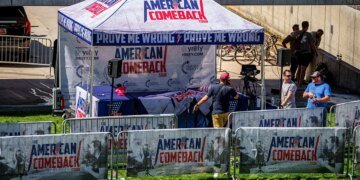
The incident in question occurred during Kirk’s “American Comeback Tour,” attended by approximately 3,000 people at Utah Valley University. The chaos that ensued following the shooting caused widespread panic, with eyewitnesses recounting the scene as one reminiscent of a mass shooting, leaving many attendees in distress as they scrambled for safety.






