






















A recent court order has unveiled shocking details of an attack during a Jewish festival at Bondi Beach that left multiple casualties. Documents suggest the assailants utilized several undetonated explosives, including a “tennis ball bomb,” at the onset of the assault, intensifying concerns surrounding extremist violence in Australia.
This incident is significant as it not only highlights the dangers posed by violent extremism but also raises questions about the security measures in place to protect vulnerable communities during public celebrations. The implications of such an attack resonate deeply, especially given the historical context of antisemitism and political tensions.
Key Developments
- Naveed Akram, 24, has been charged with 15 counts of murder and has been moved from hospital to prison after being critically injured during the attack.
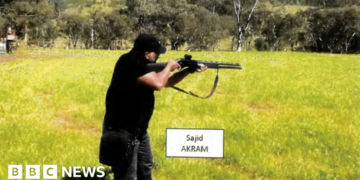
- The second gunman, Sajid Akram, was fatally shot by police.
- Investigators allege that the Akrams meticulously planned the attack for several months, motivated by extremist ideology linked to the Islamic State.
- Documents indicate the pair prepared by recording a video manifesto and conducting firearms training prior to the attack.
- Three homemade pipe bombs and a “tennis ball bomb” were thrown during the assault; however, they did not detonate, though they were assessed as viable.
Full Report
Details of the Attack
Authorities allege that the Akrams carried out extensive reconnaissance days before the attack, with CCTV footage capturing their actions as they scouted the area. Two days before the incident, they were seen driving to Bondi Beach and exiting their vehicle to survey potential targets.
Planning and Motivation
Documents reveal the Akrams engaged in firearms training, reportedly in rural New South Wales, indicating a high level of preparation. The videos found on Naveed’s phone allegedly show them discussing their motivations while seated in front of an Islamic State flag. They condemned “Zionist” actions in the video they recorded.
Evidence Collected
Police claim that the Akrams brought firearms and explosives to the beach in a vehicle, with video footage capturing them loading these dangerous items hours before the attack. They reportedly placed Islamic State flags in their vehicle’s windows before executing the assault by approaching a footbridge where they opened fire on festival attendees.
Outcome of the Incident
Naveed Akram sustained a critical abdominal injury during police intervention and has since been released from the hospital. Following his initial court appearance, he was transferred to a correctional facility pending further legal proceedings.
Context & Previous Events
The incident occurred during a Hanukkah celebration on December 14 and raised immediate alarms over public safety at religious events. The attack has brought renewed attention to extremist threats in Australia, particularly among communities celebrating cultural or religious milestones.