






















Border Tensions Escalate Amid Renewed Clashes Between Pakistan and Taliban Forces
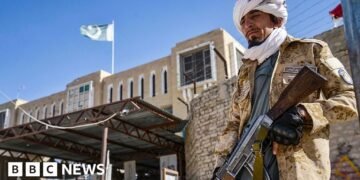
Border skirmishes reignited between Pakistan and the Taliban forces of Afghanistan, as both sides accused each other of violating a tenuous ceasefire. The clashes prompted an exodus of residents from Spin Boldak, a city on the Afghan border, underscoring the ongoing volatility in the region.
Why It Matters
The renewed fighting threatens to destabilize an already fragile peace established just two months ago. With each government blaming the other for initiating hostilities, the resurgence of violence raises stakes in a region where both countries have long grappled with security concerns and regional tensions.
Key Developments
- Clashes took place overnight, lasting approximately four hours.
- Local medical sources reported four fatalities and several injuries as a result of the violence.
- Each side accuses the other of being the aggressor in the conflict.
- Heavy artillery was allegedly used by Pakistani forces, impacting civilian areas.
- Both Pakistan and Afghanistan’s Taliban had agreed to a ceasefire facilitated by Qatar and Turkey less than two months prior.
Full Report
Details of the Clashes
Late Friday evening, residents noted that the exchange of gunfire began around 22:30 local time. Eyewitnesses reported a stream of Afghans fleeing on foot as well as in vehicles, highlighting the urgency and fear driving the evacuation. The head of Kandahar’s information department stated that the Pakistani military utilized both light and heavy artillery, resulting in damage to civilian homes from mortar fire.
Government Responses
In an official statement, Mosharraf Zaidi, a spokesperson for Prime Minister Shehbaz Sharif of Pakistan, accused Taliban forces of “unprovoked firing” and emphasized that Pakistan’s military provided a robust and immediate response. He reassured the public of the government’s commitment to safeguard national security.
Conversely, a spokesperson for the Taliban insisted that Pakistan initiated the exchange of fire, claiming they were compelled to retaliate. The conflicting narratives reflect deep-seated mistrust and ongoing hostilities between the two governments.
Background of Recent Clashes
These confrontations are not isolated incidents, as sporadic fighting has persisted between the two nations in recent months. Following the Taliban’s ascent to power in Afghanistan in 2021, the situation has deteriorated, with frequent accusations by Islamabad that the Taliban offers refuge to militant factions conducting assaults within Pakistan’s borders. The Pakistan Taliban has reportedly carried out over 600 attacks against Pakistani forces over the past year alone.
Last week, representatives from both nations convened in Saudi Arabia for a fourth round of peace negotiations but failed to reach a substantive agreement, obfuscating the road ahead for achieving lasting stability.
Context & Previous Events
In July, a ceasefire negotiated by Qatar and Turkey concluded a week-long period of intense conflict that resulted in numerous casualties, marking the deadliest encounters between Pakistan and the Taliban since 2021. Despite initial hopes for peace, tensions have remained high, with both sides also reviving longstanding grievances against one another.