






















145 Militants Killed in Fierce Balochistan Clashes
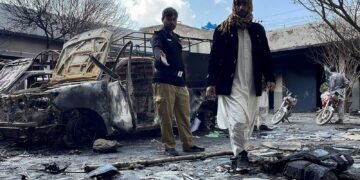
A series of coordinated attacks by separatist militants in Pakistan’s Balochistan province has resulted in the deaths of nearly 150 insurgents and at least 50 others, including police and civilians. The Pakistani government’s latest figures highlight the increasing violence in a region long plagued by separatist activity.
Why It Matters
The recent clashes underscore the persistent instability in Balochistan, Pakistan’s largest and least developed province. The region has been a hotbed of insurgency, with separatists advocating for greater autonomy and a larger share of its rich natural resources. These events pose significant challenges to Pakistan’s security apparatus and amplify concerns over the safety of civilians caught in the crossfire.
Key Developments
- Nearly 150 militants were killed in 40 hours of intense fighting following a series of simultaneous attacks in multiple districts.
- The military, police, and counterterrorism units launched extensive operations in response to the attacks.
- A banned separatist group, the Baloch Liberation Army, claimed responsibility, referring to their actions as "Operation Herof," or "black storm."
- The Pakistani government reported significant casualties, with 17 police officers and 31 civilians killed, while insurgents claimed to have killed numerous security personnel.
- Security officials indicated that some of the slain militants may have been Afghan nationals.
Full Report
Ground Attacks
On a recent Saturday, militants attacked various civilian targets, including hospitals, schools, banks, and markets, in a coordinated strike across the districts of Quetta, Gwadar, Mastung, and Noshki. Eyewitnesses described chaos as armed assailants opened fire on security installations, attempted suicide bombings, and temporarily blocked key urban routes.
According to Balochistan’s Chief Minister Sarfraz Bugti, the operation led to the deaths of 92 militants on Saturday alone, with an additional 41 killed the day before. This spike in militant fatalities represents one of the most severe losses for insurgents in a brief period, emphasizing the severity of the clashes.
Ongoing Military Operations
Responding to intelligence reports of an impending insurgency, the Pakistani military commenced pre-emptive operations prior to the attacks. Interior Minister Talal Chaudhry stated that these preliminary actions contributed to the high number of insurgent fatalities. He also confirmed that the bodies of the militants are now in custody, pending further investigation.
Civilian Impact
The violence has devastated local communities, with reports indicating that the insurgents targeted ordinary civilians indiscriminately. Chaudhry accused the attackers of employing civilians as human shields and expressed concern over the increasing incidences of targeting vulnerable populations.
Context & Previous Events
Balochistan has been the focal point of a protracted insurgency seeking autonomy since tensions escalated in the last two decades. The separatist groups argue for a larger share of the province’s rich resources, exacerbating a longstanding disparity in economic development. Pakistan’s government has repeatedly accused these militant factions of receiving support from India—a claim that India’s government has categorically denied. The persistence of violence highlights the complex security landscape that Pakistan faces in managing regional stabilit