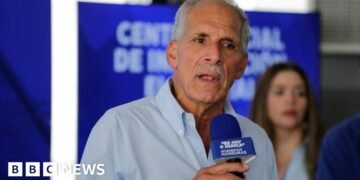























Nasry Asfura Declared Winner of Controversial Honduras Presidential Election
Nasry Asfura has officially claimed victory in Honduras’s presidential election, overcoming technical setbacks and accusations of fraud that have stirred tensions across the nation. The conservative candidate of the National Party, endorsed by former U.S. President Donald Trump, received 40.3% of the vote, narrowly defeating Salvador Nasralla of the center-right Liberal Party, who secured 39.5%.
Why It Matters
This election outcome holds significant implications for Honduras’s political landscape, especially considering the allegations of fraud and technical failures that accompanied the vote. The results have sparked deep divisions, prompting protests from Nasralla’s supporters and raising concerns about the legitimacy of the electoral process. Additionally, the U.S. has expressed interest in the transition, indicating the potential impact on international relations and regional security.
Key Developments
- Nasry Asfura won the election with 40.3% of the vote, edging out Salvador Nasralla’s 39.5%.
- Technical issues delayed vote counting, leading to around 15% of tallies being counted by hand.
- U.S. Secretary of State Marco Rubio urged respect for the election result to ensure a peaceful transition.
- Congress President Luis Redondo labeled the election outcome as "completely illegal."
- Protests erupted in Tegucigalpa over alleged electoral fraud, predominantly from supporters of the Libre party.
- Outgoing President Xiomara Castro accused Trump of interference and called the election an "electoral coup."
- Trump had previously threatened to withdraw financial support to Honduras should Asfura lose.
Full Report
Election Announcement
Following the electoral results, Asfura proclaimed readiness to govern via a post on social media, reassuring supporters with the statement, "Honduras: I am ready to govern. I will not let you down." The National Electoral Council (CNE) faced scrutiny for delays in vote counting due to technical malfunctions, described by the council’s president, Ana Paola Hall, as "inexcusable." The private firm responsible for tabulating results had reportedly performed maintenance without notifying the CNE.
Reaction to Results
In light of the narrow margin separating the candidates, the electoral process faced significant skepticism. Luis Redondo, president of the National Congress, declared the election results illegal, escalating tensions. Meanwhile, Nasralla accused unnamed "corrupt people" of manipulating the vote count, claiming that Trump’s comments negatively affected his campaign.
U.S. Involvement
The election garnered U.S. attention, with Secretary of State Rubio emphasizing the importance of a respectful transition to Asfura’s administration. He expressed optimism about working together to enhance bilateral cooperation aimed at curbing illegal immigration and improving economic relations. Notably, Trump previously pardoned Juan Orlando Hernandez, a member of Asfura’s party, who was serving a lengthy prison sentence in the United States for drug and weapons offenses.
Protests and Tensions
The aftermath of the election saw unrest in Honduras, as thousands protested in the capital, voicing concerns over alleged electoral misconduct. Discontentment had been brewing, heightened by Castro’s claims of outside interference and conspiracies surrounding the election process.
Context & Previous Events
The election took place on November 30 and faced two delays in vote counting due to technical issues. The reports of fraud and external interference emerged as significant themes leading up to the election, especially given Castro’s barring from running for a second term due to constitutional restrictions. Tensions escalated with the endorsement of Asfura by Trump, who had threatened financial repercussions should his candidate not prevail.