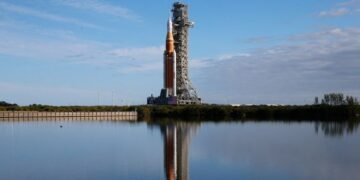























NASA’s Artemis 2 Rocket Arrives at Launch Pad, Countdown Begins
NASA’s Artemis 2 mission has reached a significant milestone as its massive rocket, designed to transport astronauts around the moon, arrived at its launch pad. The journey took 11.5 hours, transporting the rocket upright for four miles on a specialized Crawler Transporter, marking a substantial step towards the planned lift-off next month.
Why It Matters
The Artemis 2 mission is pivotal as it represents the first time astronauts will orbit the moon in more than five decades. This mission is part of NASA’s broader effort to return to lunar exploration, competing closely with China’s ambitions to establish a foothold on the moon. As the U.S. pushes towards a sustainable lunar presence by the late 2020s, the stakes in this new space race are rising.
Key Developments
- The Artemis 2 rocket’s journey to the launch pad used Crawler Transporter 2, which weighs 3 million kilograms and is approximately half the size of a football pitch.
- At 8.8 million pounds of thrust, the rocket is 15% more powerful than the Saturn V used during Apollo missions, capable of lifting 27 tonnes into deep space.
- Four astronauts will embark on the Artemis 2 mission, anticipated for lift-off on February 6, 2024.
- The crew shared personal items they plan to take on the mission, including sentimental heirlooms and keepsakes.
- NASA will conduct a rigorous series of tests, including a wet dress rehearsal on February 2, ahead of the launch.
Full Report
Arrival at Launch Pad
The Artemis 2 rocket, with the Orion crew capsule attached, has successfully reached its launch pad, following a meticulous transportation process. This operation, managed by Crawler Transporter 2, was necessitated by the rocket’s monumental size; it is taller than Big Ben. The transporter, traveling at just one mile per hour, consumed diesel fuel at a rate of one liter every 3.5 meters.
Astronaut Insights
As the rocket approached its launch site, the four astronaut crew shared their plans for personal items to take into space. Mission commander Reid Wiseman expressed his intention to bring a blank piece of paper and writing utensils, hoping to capture thoughts and experiences during the journey. Other crew members planned to take meaningful mementos, such as Bibles and heirlooms, underscoring the personal significance of their mission.
Preparations for Launch
NASA is advancing toward the Artemis 2 launch, which is currently set for February 6, 2024. This mission will mark the first crewed flight to orbit the moon since the Apollo program. Following the rocket’s arrival, NASA will commence extensive testing, including a fuelling test known as the wet dress rehearsal.
Context & Previous Events
The Artemis initiative aims to return humans to the lunar surface, with Artemis 3 poised to land astronauts by 2028, three years later than initially planned. Meanwhile, China is targeting a crewed moon landing by 2030, intensifying competition for lunar exploration. The focus of these new missions will include the moon’s unexplored south pole, where scientists believe there may be valuable water ice for future missions.
As the launch date approaches, all eyes will remain on NASA’s preparations and the unfolding space race with international rivals.






