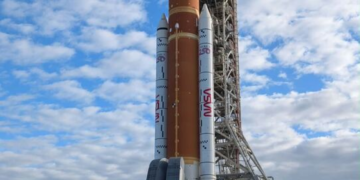























Artemis II Launches NASA’s Next Step Toward Moon Travel
NASA has officially initiated the rollout of its Artemis II spacecraft, poised to send four astronauts around the moon, marking a significant milestone in the United States’ return to lunar exploration after over 50 years. The mission is a precursor to further deep-space endeavors, including potential manned missions to Mars.
Why It Matters
The Artemis II mission is not just about reaching the moon; it represents a renewed commitment to space exploration and scientific discovery. As NASA transitions from an era of robotic missions to human returns to lunar soil, the success of this mission carries the weight of national pride and international competitiveness in space exploration.
Key Developments
- The integrated Space Launch System (SLS) rocket and Orion spacecraft began their journey from the Vehicle Assembly Building to Launch Pad 39B Saturday morning around 9 a.m. ET.
- The transport of the 11 million-pound rocket stack spans four miles and can take up to 12 hours.
- NASA officials indicated that the launch could happen as early as February 6, depending on readiness.
- The mission’s crew consists of astronauts Christina Koch, Victor Glover, Reid Wiseman, and Canadian Space Agency astronaut Jeremy Hansen.
- This mission will include a loop around Earth before heading to the moon, with an anticipated duration of about ten days.
- Jared Isaacman, NASA director, emphasized the mission’s role in paving the way for future explorations, including Artemis 100 and beyond.
Full Report
Mission Rollout
On Saturday, NASA commenced the rollout of its Artemis II mission spacecraft, integrating the SLS rocket and Orion to transport its selected crew to the moon. The journey from the Vehicle Assembly Building to the launch pad is a critical step leading up to the mission’s liftoff, which aims to both inspire future generations and fulfill a long-standing promise of lunar return.
Potential Launch Window
The targeted launch date for Artemis II is set for February 6, conditional on the readiness of the team and rocket infrastructure. NASA’s long-term objective is to not only land on the moon but to establish a sustainable human presence there.
Astronaut Crew and Objectives
The mission’s crew comprises four accomplished astronauts: Christina Koch, Victor Glover, Reid Wiseman, and Jeremy Hansen from the Canadian Space Agency. Their primary task will be to orbit Earth before embarking on their lunar journey, gathering invaluable data along the way that will inform future missions.
Vision for Future Exploration
Jared Isaacman spoke to reporters about the overarching goals of the Artemis program, stating that each mission will enhance NASA’s capabilities and adaptability in space travel. The knowledge gained during this mission is anticipated to contribute essential insights toward Artemis 100 and subsequent endeavors.
Context & Previous Events
The Artemis II mission follows the successful launch of the original Artemis mission, which deployed an uncrewed craft into space in 2022. This evolution highlights NASA’s commitment to advancing human space exploration, transitioning from unmanned tests to crewed missions aimed at re-establishing human presence on the moon.






