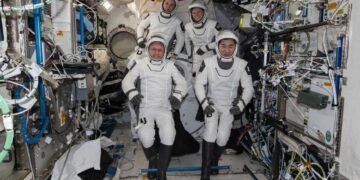























SpaceX Crew-11 Returns Early Due to Astronaut’s Medical Condition
NASA has announced an unexpected early return for its Crew-11 mission, marking a significant moment in space travel history due to a crew member’s undisclosed medical issue. The decision comes amid heightened concerns for astronaut health, underscoring the importance of medical preparedness in space exploration.
Why It Matters
This return marks the first medical evacuation from the International Space Station (ISS) in its 25-year history. The situation emphasizes the critical nature of addressing health problems in an environment where immediate medical support is limited and reinforces the need for comprehensive health protocols for astronauts.
Key Developments
- NASA has decided to bring the four-person Crew-11 team back to Earth about a month early due to a health condition affecting one astronaut.
- Crew members include NASA astronauts Zena Cardman and Mike Fincke, Russian cosmonaut Oleg Platonov, and Japanese astronaut Kimiya Yui.
- They are scheduled to splash down off California’s coast early Thursday morning.
- The agency has confirmed the early return is not an emergency evacuation, as the affected astronaut’s condition is stable.
- The identity of the crew member and details of the medical issue are not disclosed for privacy reasons.
- Currently, three spacecraft occupants will remain on the ISS, including another NASA astronaut and two Russian cosmonauts.
- A replacement crew is slated for launch in February.
Full Report
Medical Conditions Monitored
The first indication of a medical issue arose on January 7 when a planned spacewalk was abruptly canceled due to a "medical concern." Following a thorough assessment, NASA opted to bring Crew-11 back to Earth for comprehensive diagnostic tests, emphasizing the availability of advanced medical facilities on the ground.
James Polk, NASA’s chief health and medical officer, stated that while health issues in space are common, the situation warranted careful observation and proactive measures. Historically, NASA anticipated needing to bring astronauts home for medical reasons approximately every three years, but this incident marks their first execution of such a plan.
Crew’s Response
During a recent change-of-command ceremony broadcasted from the ISS, the crew members appeared stable and in good spirits. Cardman noted the strong sense of camaraderie among the astronauts and their ground support, reassuring the public that everyone onboard was well cared for. In a social media post, Fincke expressed that returning early was "the right call," despite the bittersweet circumstances.
Previous Medical Challenges
NASA has previously trained crews to deal with medical emergencies and has had to manage various typical health issues in space, from minor ailments like ear pain to more complex complications. In one notable case, an astronaut was treated for a blood clot found incidentally during a research project. This situation demonstrated the intricate challenges of providing medical care in a microgravity setting, where even routine procedures can become significantly complicated.
Context & Previous Events
Historically, NASA has developed robust protocols for addressing health concerns in space, preparing for various medical scenarios during the ISS’s continuous twenty-five years of operation. This early return decision serves as a significant milestone, pushing forward discussions about astronaut health management and readiness for future missions.






