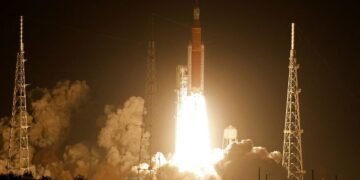























NASA’s Artemis 2 Rocket Set for Launchpad Rollout
NASA is preparing to roll out its Artemis 2 rocket to the launchpad at Kennedy Space Center in Florida, marking a significant milestone in humanity’s return to the moon. If conditions permit, the 98-meter mega-rocket will be transported from its assembly hangar to launch pad 39B on January 17, setting the stage for the first crewed lunar mission since 1972.
Why It Matters
This mission is not only pivotal for NASA, but it also signifies a competitive edge in the global space race, particularly with China. As the U.S. aims to plant its flag at the moon’s south pole by 2028, the Artemis 2 mission represents a crucial step toward achieving that ambitious goal.
Key Developments
- Rollout Date: NASA plans to move the Artemis 2 rocket to the launch pad on January 17, pending weather and technical conditions.
- Transport Vehicle: The rocket will be transported over four miles by a specialized crawler transporter, taking up to 12 hours to complete the journey.
- Crewed Flight: The mission will carry four astronauts—NASA’s Reid Wiseman, Victor Glover, and Christina Koch, along with Jeremy Hansen from the Canadian Space Agency—on a 10-day lunar flight.
- Preparation and Testing: Following the rollout, NASA will conduct final testing and rehearsals, emphasizing crew safety as they approach the mission.
- Launch Schedule: The current launch window is between February 6 and April, contingent on specific criteria related to the moon’s position and potential weather disruptions.
Full Report
Rollout and Testing Procedures
NASA officials announced that the Artemis 2 rocket will begin its movement to the launch pad on January 17, provided that the weather and any technical issues do not pose challenges. Upon reaching the launch pad, engineers will connect ground support systems and perform a comprehensive series of checks. A "wet" dress rehearsal is planned for the end of January, where the rocket will be loaded with approximately 3.2 million liters of propellant, and countdown procedures will be practiced.
NASA’s Commitment to Safety
Lori Glaze, acting associate administrator for NASA’s Exploration Systems Development Mission Directorate, emphasized the agency’s unwavering commitment to safety. "We have important steps remaining on our path to launch, and crew safety will remain our top priority at every turn," she stated, highlighting the rigorous preparations leading up to the crewed mission.
Technical Challenges
Artemis 2 is already over a year behind schedule due to significant issues identified during the unmanned Artemis 1 launch in 2022. The Orion crew capsule faced serious problems with its life support system and heat shield, requiring modifications. Currently, engineers are addressing last-minute glitches, including adjustments to a critical cable in the rocket’s emergency abort system.
Upcoming Launch Window and Challenges
NASA has set a tentative launch timeframe between February 6 and April. There are only five launch days each month due to the moon’s positioning. Furthermore, launch attempts may be canceled based on unfavorable weather or other technical disruptions, including any unauthorized traffic in the no-go zone surrounding the launch area.
Context & Previous Events
The Artemis 2 mission follows the successful unmanned Artemis 1 launch in 2022, which served as a precursor to the current crewed endeavor. In December, former President Donald Trump signed an executive order aimed at ensuring U.S. space superiority, setting an ambitious goal for America to plant its flag on the lunar surface by the end of his second term, most likely in 2028.






