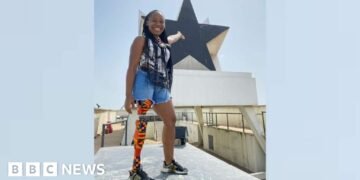























Abena Christine Jon’el: Redefining Disability Representation on Ghana’s Runway
Abena Christine Jon’el, a Ghanaian-American model and writer, made headlines at a recent fashion show in Ghana, using her platform to advocate for the visibility of individuals with disabilities. Her appearance, which featured a colorful African print adorning her prosthetic leg, sent a powerful message about the potential of differently-abled individuals and their place in society.
Why It Matters
Abena’s participation in the fashion show marks a pivotal moment in advocating for inclusivity in Ghana, a country grappling with perceptions of disability. Her work challenges stereotypes and calls for a shift in how society views and supports people with disabilities. By stepping into the limelight, Abena hopes to inspire change and provide a voice for those often overlooked.
Key Developments
- Abena made a notable appearance at the 15th edition of Rhythms on the Runway in Accra.
- Her presence aimed to raise awareness about the representation of disabled individuals in Ghana.
- She has been an advocate for disability rights, focusing on visibility and access.
- Abena described her prosthetic leg wrapped in kente cloth as both a mobility aid and a cultural symbol.
- Her walk on the runway garnered widespread attention and praise from attendees and officials.
Full Report
A Journey of Resilience
At just two years old, Abena faced adversity when diagnosed with a rare form of cancer, leading to the amputation of her right leg. Reflecting on this life-changing decision, Abena expressed gratitude for the choice made by her mother, which enabled her to embrace life without dependency on a wheelchair. She grew up in Chicago, U.S.A., but felt a strong connection to her ancestral roots in Ghana.
Reclaiming Identity
Abena’s turning point came during her first visit to Ghana in 2021, where she felt a deep sense of belonging. Experiencing the historical significance of locations like the Assin Manso slave river site reshaped her understanding of identity. Following that trip, she committed to living in Ghana permanently, viewing herself as “Ghanaian by ancestry and adoption.”
Advocacy through Fashion
At the recent fashion show, Abena seized the opportunity to advocate for visibility, showcasing her prosthetic leg as a declaration of cultural pride. She approached the organizers to emphasize the importance of representation, understanding that her presence could influence the narrative around disability in Ghana. Her runway walk was met with commendations from officials, who recognized her effort to reshape public perception.
Bridging Gaps
Abena differentiates the treatment of disabled individuals in the U.S. and Ghana, noting that while progress is being made in America, Ghana still has a long way to go. Despite poverty of representation, her approach is focused on changing negative stigma surrounding disability, aiming to highlight the strengths and capabilities of individuals like herself. Through her endeavors in public speaking and modeling, she desires to present a multifaceted view of disability that celebrates talent and ambition rather than framing it within struggle.
Context & Previous Events
Before her influential appearance, Abena had built a career in the U.S. as a writer and public speaker. Her advocacy work in Ghana is driven by a commitment to transform stereotypes and foster acceptance for disabled individuals, striving for a future where they are seen not just as people in need of pity, but as vibrant, capable members of society.