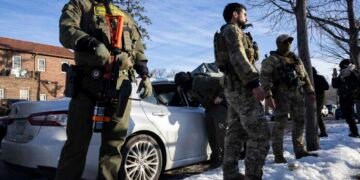























Tensions Rise in Minnesota Over Federal Immigration Enforcement
As federal immigration agents ramp up their presence in Minnesota, the state finds itself at the center of a contentious political battle over immigration policies. Recent incidents involving Immigration and Customs Enforcement (ICE) have intensified local opposition, prompting a broader debate about federal overreach and public safety.
Why It Matters
This situation is significant not only for Minnesota but also for the national conversation surrounding immigration enforcement. The increase in federal agents in a predominantly blue state raises questions about the balance of power between state and federal authorities, the safety of residents, and the treatment of immigrants in detention facilities. The political stakes are high as local leaders challenge federal actions, setting the stage for potential legal and electoral consequences.
Key Developments
-
Escalation of ICE Activity: There are over 2,000 federal immigration agents currently operating in Minnesota, with expectations of increased numbers.
-
Recent Shootings: An ICE agent recently shot a man during an attempted arrest, which has sparked outrage and calls for federal intervention to be reconsidered.
-
Political Reactions: Governor Tim Walz has called for a reevaluation of ICE’s role in Minnesota, while state leaders like Attorney General Keith Ellison and Mayor Jacob Frey have voiced strong opposition to federal actions.
-
Legal Challenges: Minnesota’s congressional delegation, including notable Democrat Ilhan Omar, is pursuing legal avenues to challenge the federal government’s immigration enforcement practices.
- Future Electoral Implications: As local leaders focus on these issues, shifts in the political landscape could arise, especially with upcoming midterm elections.
Full Report
Increasing Federal Presence
Since President Trump began his second term, he has emphasized stricter immigration enforcement, stating intentions to deter illegal migration and increase deportations. Minnesota has become a focal point for this policy shift, leading to heightened tensions between federal agents and state officials.
A recent deadly incident involving ICE has amplified resistance among state leaders. Renee Macklin Good was killed by an ICE agent last week, significantly intensifying scrutiny of federal operations. In a separate incident on Wednesday, an agent shot a man in the leg during an arrest attempt, with Homeland Security claiming they were ambushed. President Trump threatened to deploy troops to the state under the Insurrection Act, citing a lack of cooperation from Minnesota’s leaders.
State Leaders Push Back
Governor Walz has openly criticized the federal government’s actions, urging for a peaceful resolution and emphasizing the need to protect the rights of all Minnesota residents. He stated that the ongoing situation undermines local governance and creates chaos. Mayor Frey also condemned ICE’s expanded presence, labeling the dynamic between state and federal forces as "unsustainable."
Ellison responded to Trump’s threats, declaring there was no justification for utilizing the Insurrection Act in Minnesota. This pushback reflects a growing sentiment among elected officials who are concerned about the implications of heightened federal enforcement on community safety and trust.
Congressional Oversight Efforts
Minnesota’s congressional representatives are actively attempting to provide oversight regarding the conditions and practices within ICE detention facilities. Recently, Reps. Angie Craig, Kelly Morrison, and Ilhan Omar encountered obstacles during what was intended to be an unannounced visit to an ICE facility. Their subsequent statements criticized federal authorities for obstructing congressional duties and demanded clarity on the treatment of detainees.
Morrison, a physician, expressed alarm upon observing that detainees appeared to be in distress, further calling into question the policies of the current administration. In response, Homeland Security Secretary Kristi Noem instructed her staff to enforce a seven-day advance notice for facility visits, a move deemed unacceptable by many state lawmakers.
The Road Ahead
With Governor Walz’s withdrawal from seeking reelection, speculation regarding the political landscape in Minnesota is growing. Senator Amy Klobuchar is now considering a gubernatorial run, emphasizing that Democrats need to secure at least one chamber of Congress to provide a counterbalance to President Trump’s policies. Klobuchar underscored the urgent need for a political framework that can rein in executive overreach and protect civil liberties.
Context & Previous Events
The current tensions are rooted in a broader narrative of immigration enforcement under the Trump administration. Minnesota, a historically welcoming state for immigrants, has experienced a noticeable shift as federal enforcement ramps up, leading to growing concerns among residents and lawmakers alike. The disputes over ICE’s operations in Minnesota reflect larger debates about national immigration policies and the role of state versus federal authorities.






