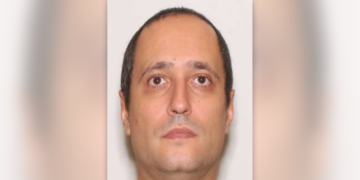























The tragic deaths of two Brown University students and an MIT professor in a series of violent incidents continue to raise questions about the motive behind the suspect’s actions. Claudio Neves-Valente, identified as the gunman, subsequently took his own life after a multi-state manhunt, leaving authorities searching for answers.
This case sheds light on complex issues surrounding mental health, academic pressure, and the tragic consequences that can arise when individuals feel disconnected from success. It challenges educational institutions to consider their roles in identifying and supporting troubled individuals.
Key Developments
- Claudio Neves-Valente, 48, is suspected of killing two Brown students on December 13 and MIT professor Nuno Loureiro on December 15.
- Authorities believe Neves-Valente may have perceived Loureiro as a “symbol of success” that he never achieved.
- MIT and Brown University have stated that Neves-Valente had no recent affiliation with either school, as he withdrew from Brown’s physics program in 2003.
- Loureiro was a respected leader in fusion-energy research, recently receiving a significant award for his work.
- Experts suggest Neves-Valente’s fixation on Loureiro was unwarranted, and there was no mutual rivalry between them.
Full Report
The Shootings
Authorities are investigating the tragic series of shootings at two reputable institutions. On December 13, Neves-Valente reportedly opened fire in a building at Brown University, resulting in the deaths of two students and injuring nine others. Just days later, on December 15, he shot Professor Loureiro at the latter’s home in Brookline, Massachusetts, before taking his own life following law enforcement’s pursuit.
Suspect’s Background
Neves-Valente, who was once considered a physics prodigy in Portugal, studied at Brown University from 2000 to 2003 but had no recent ties to the institution. Following his withdrawal, his life took a different trajectory that may have led to feelings of inadequacy. Experts indicated that his fixation with Loureiro appears to stem not from a rivalry but from a deep-seated perception of failure.
Reactions and Analysis
Dr. Bruno Goncalves, the president of Portugal’s Institute of Plasma and Nuclear Fusion, emphasized that the attacks seem to result from Neves-Valente’s personal struggles rather than any rivalry with Loureiro. He stated that Neves-Valente likely viewed Loureiro’s academic achievements as a painful reminder of his own failures. Goncalves also dismissed the idea that institutional pressures were at play, highlighting that many individuals have successfully transitioned to fulfilling careers after academia.
Loureiro’s Legacy
Professor Loureiro was well-respected in his field and was recognized for his contributions to fusion energy research. He was awarded the Presidential Early Career Award for Scientists and Engineers, reflecting his impact in the scientific community. At the time of the shooting, he was at home with family and had no reason to believe he was under threat.
Context & Previous Events
No explicit prior incidents connected to Neves-Valente or similar violent events were mentioned in the source material. However, the victim’s recent accolades underline the tragic nature of the violence and its implications for mental health awareness in academia.






