






















Missing Commemorative Plaque Raises Concerns as Jan. 6 Anniversary Approaches
As the fifth anniversary of the January 6, 2021, Capitol riot approaches, the official plaque commemorating the police officers who defended the Capitol remains undisplayed. This absence, combined with ongoing legal disputes over its installation, raises critical questions about how history is remembered and interpreted.
Why It Matters
The missing plaque symbolizes a broader struggle over the interpretation and acknowledgment of a pivotal event in American democracy. With some politicians emphasizing alternative narratives of the incident, the plaque’s absence may facilitate a shift in public memory, potentially influencing future perceptions of democratic resilience in the U.S.
Key Developments
- The plaque honoring law enforcement officers has not been displayed as mandated by law, and its location is reportedly unknown, believed to be in storage.
- House Speaker Mike Johnson has not yet revealed the plaque, while the Trump administration’s Department of Justice is moving to dismiss a police officers’ lawsuit demanding its installation.
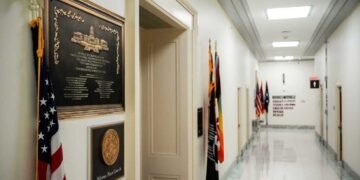
- Approximately 100 members of Congress, primarily from the Democratic party, have created makeshift replicas of the plaque outside their offices.
- The missing plaque allows visitors to the Capitol to bypass formal remembrance of January 6, raising concerns about historical narratives and the memory of democracy under threat.
- Two officers involved in the Capitol defense have initiated legal action over the delay in displaying the plaque, emphasizing the importance of recognizing their service.
Full Report
Legal Negotiations Over the Plaque
Lawmakers approved the creation of the commemorative plaque in March 2022, acknowledging the bravery of the officers who defended democracy that day. However, the installation deadline has passed, and disputes over its display continue. The Department of Justice argues that Congress has already recognized law enforcement efforts through the plaque’s approval, making further action unnecessary. The DOJ also claims the proposed installation would not address the alleged threats faced by the involved officers.
Commemoration Through Replicas
In light of the plaque’s absence, many Democratic lawmakers have taken steps to memorialize January 6 by hanging replicas outside their offices. These replicas feature messages of gratitude for the officers’ courage and serve to remind the public of the day’s significant events. Representative Jamie Raskin highlighted the need for younger generations to comprehend the critical importance of that day in U.S. history.
Reception and Opinions
There appears to be a growing divide in how the January 6 event is portrayed. While some Republicans downplay the incident—such as former President Donald Trump, who referred to it as a "day of love"—Democrats continue to advocate for remembrance and accountability. Rep. Zoe Lofgren expressed the necessity of honoring law enforcement, stating that they “really saved my life, and they saved democracy.”
Congressional Hearings and Ongoing Divisions
On the anniversary of the event, Democrats are organizing a hearing focused on threats to electoral integrity, although Republican participation remains uncertain. While some factions call for transparency, others aim to present an alternative narrative surrounding the events of January 6.
Context & Previous Events
The plaque was part of a broader funding package, indicating Congressional acknowledgment of the officers’ sacrifices. In total, approximately 1,500 individuals have faced legal consequences in connection with the Capitol riot, marking it as one of the largest federal prosecutions in American history. The absence of a formal memorial contrasts sharply with established commemorations for events like the September 11 attacks, demonstrating a significant gap in national memory and historical accountability concerning January 6.






