






















A Judge Limits Federal Response to Peaceful Protests in Minneapolis
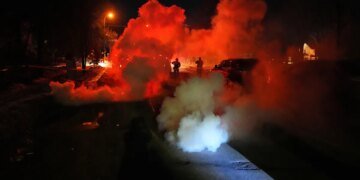
A federal judge in Minnesota has issued a significant ruling that restricts the actions of federal officers during peaceful protests in Minneapolis. U.S. District Judge Kate Menendez’s order, delivered on Friday, prohibits Immigration and Customs Enforcement (ICE) officers from detaining or using tear gas against demonstrators participating in Operation Metro Surge, provided they are not obstructing law enforcement.
Why It Matters
This ruling comes amid heightened tensions in Minneapolis following the fatal shooting of local resident Renee Good by an ICE agent. The decision underscores ongoing debates regarding civil rights, law enforcement tactics, and the conduct of federal agents during confrontations with protesters, particularly in the context of immigration enforcement.
Key Developments
- The ruling bars federal agents from using non-lethal munitions against peaceful protesters.
- Protests erupted after ICE agent Renee Good was fatally shot during a confrontational incident on January 7.
- Department of Homeland Security officials emphasized that while they support lawful enforcement, they will not tolerate violence against officers.
- This decision stems from a lawsuit filed by six Minnesota activists who argued that federal actions violated residents’ constitutional rights.
Full Report
Details of the Ruling
Judge Menendez’s order closely regulates federal officers’ conduct, stating they must demonstrate probable cause or reasonable suspicion before acting against individuals involved in peaceful protests or simply observing federal operations. The ruling clearly articulates that actions such as following law enforcement officers at a sensible distance do not constitute reasonable suspicion.
Officials Respond
Following the ruling, Tricia McLaughlin, Assistant Secretary of the Department of Homeland Security, asserted that the First Amendment does not protect violent conduct, labeling any obstruction of law enforcement as a federal crime. McLaughlin defended the actions of federal agents, stating that they have utilized the minimum necessary force to maintain public safety amid escalating risks to officers.
Recent Incidents in Minneapolis
The ruling arises against a backdrop of recent violent confrontations involving ICE agents. Good was killed after an incident where she allegedly tried to run over an agent, followed by the agent reportedly using profanity and expressing anger after the shooting. The incident has ignited a fierce backlash from local protesters and political leaders, with many calling for accountability and prosecution of the agent involved.
Additionally, a separate altercation on January 14 left an ICE officer seriously injured after an ambush by three suspects during a traffic stop, further exacerbating the existing tensions surrounding immigration enforcement in the city.
There is also a parallel lawsuit initiated by the state of Minnesota, along with the cities of Minneapolis and St. Paul, which seeks to halt aggressive enforcement measures by ICE in the area.
Context & Previous Events
The court’s decision is set against the backdrop of civil rights concerns and the contentious landscape of immigration enforcement under the Trump administration, which has faced criticism for aggressive tactics. The recent protests in Minneapolis highlight ongoing national dialogues about police accountability, community safety, and immigration policies.






