






















Minneapolis Community Rallies in Wake of Deadly ICE Confrontation
Local residents are seeking solace and support at Calvary Baptist Church following the shooting of Alex Pretti, an ICU nurse, by federal immigration agents in Minneapolis. Pretti’s death marks another grim chapter in the ongoing national debate over immigration enforcement, stirring both grief and anger among community members.
Why It Matters
The recent shooting highlights the rising tensions surrounding immigration enforcement operations in the U.S., particularly in Minneapolis, where several incidents have recently escalated concerns about safety and community trust. As the situation unfolds, local leaders and residents are calling for immediate changes to federal policies that they assert disproportionately affect both undocumented individuals and U.S. citizens.
Key Developments
- Volunteers and church staff at Calvary Baptist Church distributed coffee, snacks, and hand warmers to community members seeking refuge from the cold.
- Alex Pretti was killed by federal immigration agents on Saturday, marking the second shooting involving U.S. citizens by ICE agents in less than a month.
- Eyewitness accounts conflict with federal claims that Pretti was armed and resisting arrest, leading to widespread protests and memorials in his honor.
- Governor Tim Walz has called for the immediate withdrawal of federal agents, accusing them of endangering lives in the community.
- Protests erupted across Minneapolis as locals expressed their outrage and grief, culminating in hundreds gathering to demand an end to aggressive immigration operations.
Full Report
Community Response
On Sunday, members of the community flocked to Calvary Baptist Church, which has opened its doors as a sanctuary amid rising tensions. Ann Hotz, a daycare worker at the church, expressed her dedication to helping others during this difficult time, stating, "Yesterday, I fell apart. Today I’m here to stand with my community and help our neighbors as they remember Alex and mourn him." She emphasized the exhaustion felt by community helpers, urging for a significant change in the current landscape.
Church administrator Dean Caldwell-Tautges echoed her sentiment, describing the recent actions by federal immigration agents as reflective of a troubling current reality. "This is what America is now," he remarked, as he distributed whistles intended to alert locals of ICE activities.
Protests and Vigils
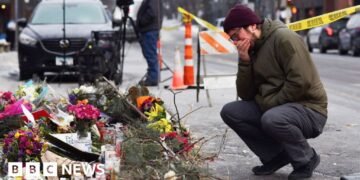
The outpouring of grief has manifested in multiple vigils across the city, with residents gathering to honor Pretti’s life. At the site of his death, mourners have placed flowers and lit candles, creating a poignant memorial. Many signs express anger towards federal agents, including one painted plea: "stop killing us."
As tensions boiled over, impromptu protests erupted downtown, with participants voicing their opposition to the federal operations. Observers noted chants of “No more Minnesota nice, Minneapolis will strike,” amidst expressions of sorrow and disbelief.
Felix Johnson, a first-time protester, voiced frustration over the federal approach to immigration enforcement. “I don’t understand how they can come in and just start snatching people that are citizens and start treating them like they’re animals,” he said while holding a sign reading "ICE out."
Political Reaction
The local and state political response has been one of urgency. Governor Tim Walz publicly urged President Trump to remove the ICE agents from Minneapolis, insisting that their presence risks further casualties. Meanwhile, Trump has praised the agents’ work but hinted at a future end to the operations without clarifying specifics.
Federal officials contend that agents acted in self-defense during Pretti’s confrontation, asserting that he had a weapon. However, family and community members have disputed this narrative, insisting he was holding a phone when he was shot.
Context & Previous Events
The situation in Minneapolis marks the second fatal shooting involving ICE agents in less than a month, following the death of Renee Nicole Good on January 7. Both incidents have sparked significant public outrage, leading to protests and calls for accountability regarding federal immigration policies. The city has become a focal point in the national immigration discourse, drawing attention to the complexities and risks surrounding current enforcement strategies.