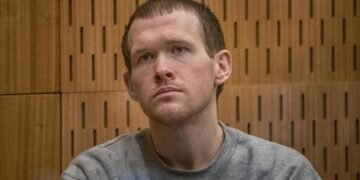























Brenton Tarrant Seeks to Overturn Guilty Pleas for Mosque Massacre
A white supremacist sentenced to life in prison for the 2019 mass shooting at two mosques in Christchurch, New Zealand, is attempting to overturn his guilty pleas. In a court appearance via video link, Brenton Tarrant claimed he was irrational at the time of his plea and argued he should face trial for the heinous attacks that killed 51 worshippers.
Why It Matters
This appeal taps into broader discussions about mental health, criminal justice, and the realities of prison conditions. Tarrant’s claims could potentially challenge the validity of his previous guilty pleas and open the door for a retrial, raising questions about how the justice system handles defendants’ mental health and the implications of such cases on victims’ families and communities.
Key Developments
- Tarrant appeared in a Wellington court via video link, seeking to withdraw his guilty pleas.
- He claims his mental health deteriorated in prison, affecting his ability to make rational decisions.
- Tarrant initially denied the charges but later pled guilty to 51 counts of murder, 40 counts of attempted murder, and one count of terrorism.
- The New Zealand Court of Appeal will assess whether prison conditions impacted his decision-making.
- Victims’ families were present during the hearing, expressing frustration with Tarrant’s appeal.
Full Report
Court Hearing Details
During the appeal hearing, Tarrant, 35, expressed that he had not been in the right frame of mind when he pleaded guilty. "I did not have the mindframe or mental health required to be making informed decisions at that time," he stated. Tarrant characterized his choices as irrational and claimed they were coerced by the harsh conditions of his imprisonment.
According to court documents, the appeal court will investigate whether Tarrant’s pleas were rendered irrational by the circumstances of his confinement, which he described as torturous and inhumane. His legal representation, the identities of which are suppressed by court order, did not comment on his statements.
Families of Victims React
Families of some of the victims attended the court proceedings, voicing their discontent with Tarrant’s actions. Rashid Omar, whose son was killed in the shooting, lamented the proceedings as a frustrating waste of time and resources: "It’s really annoying because he’s trying to play with all of us," Omar told state broadcaster TVNZ.
Appeal Timeline
The appeal is expected to last five days, with a conclusion anticipated by the end of this week. Should the appeal court reject Tarrant’s request to overturn his guilty pleas, a subsequent hearing later this year will address his sentence. If successful, Tarrant’s case could be sent back to the High Court for a retrial.
Context & Previous Events
Brenton Tarrant faced charges for the mass shootings that occurred during Friday prayers at two mosques in Christchurch, marking the deadliest mass shooting in New Zealand’s history. Initially, Tarrant denied the charges but later pleaded guilty to multiple counts, becoming the first person sentenced in New Zealand to life without parole. His actions not only shocked the nation but also ignited discussions about extremist violence and hate crimes worldwide.