






















Trump’s NATO Influence Seen as Key to Strengthened Defense Spending
The commitment of NATO countries to increase defense spending to 5% of their economic output has been heralded by the alliance’s chief as a significant achievement of former President Donald Trump’s administration. This shift comes amidst mounting tensions with Russia, prompting allies to bolster their military preparedness.
Why It Matters
This renewed focus on defense spending not only reflects heightened concerns over potential Russian aggression but also signifies a major pivot in how NATO members prioritize military readiness. As strategic threats evolve, the stakes for collective security and territorial integrity in Europe are at an all-time high, making these pledges crucial for both NATO and its member states.
Key Developments
- NATO allies pledged to allocate 5% of their GDP to defense by 2035, thanks in part to pressure from Trump.
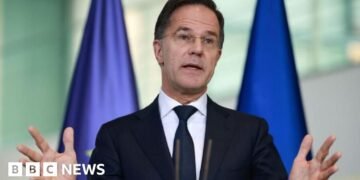
- Mark Rutte, NATO’s Secretary General, described Trump’s influence as a catalyst for NATO’s current strength.
- Concerns about a possible Russian attack within the next five years have been voiced by NATO leaders.
- Putin dismissed these fears as “hysteria,” while escalating military production in Russia.
- The U.S. is exploring a peace plan for Ukraine that could involve controversial territorial concessions to Russia.
Full Report
Increased Defense Commitments
Mark Rutte argued in a recent BBC interview that NATO is “stronger than it ever was,” attributing much of this to Trump’s influence. The former president had previously criticized European allies for inadequate defense spending, even implying that the U.S. might withdraw its protective umbrella if countries did not increase their military budgets.
Rising Security Concerns
The NATO Secretary General issued a stark warning that Russia could launch attacks on allied nations within the next five years. As tensions simmer, the stakes have grown, prompting NATO leaders to act decisively to fortify defense capabilities in light of potential Russian aggression.
Following Russia’s full-scale invasion of Ukraine in February 2022 and the annexation of several regions, fears of further territorial demands from the Kremlin have only increased. Putin has continued to assert that the goals of what he terms “the special military operation” can be met, either through diplomacy or, if necessary, military action. He characterized Western concerns over Russian threats as unfounded hysteria.
Military Production and Strategy
While NATO countries are ramping up their defense commitments, analysts note that Russia’s military production capabilities have expanded significantly. Recent reports indicate that Russia produces large quantities of military hardware monthly, outpacing many of its Western counterparts in terms of output and logistical readiness. Countries like France and Germany are now considering reinstating voluntary military service to enhance their forces, amplifying the sense of urgency in the region.
Negotiations for Peace in Ukraine
Amid these developments, U.S. officials have been negotiating with Ukrainian leaders over a peace resolution that could involve yielding some territory to Russia. While this initiative stems from Trump’s earlier proposals, it has drawn scrutiny for seemingly favoring Russian interests. U.S. officials have indicated a willingness to offer Ukraine security guarantees similar to NATO’s Article 5, underscoring America’s long-term commitment to its allies.
Context & Previous Events
Russia’s full-scale invasion of Ukraine began in February 2022, following the prior annexation of Crimea in 2014 and ongoing conflicts in Eastern Ukraine. The war has instigated a reevaluation of NATO’s defense strategies and highlighted the urgent need for member countries to enhance military spending and readiness.
In June, NATO member states convened in The Hague, agreeing to the 5% GDP defense spending target to address long-term threats, particularly from Russia and terrorism. Rutte emphasized that failure to implement these commitments could lead to significant weaknesses compared to Russian military capabilities.