






















Trump Orders Military Action in Venezuela Amid Ongoing Drug War Tensions
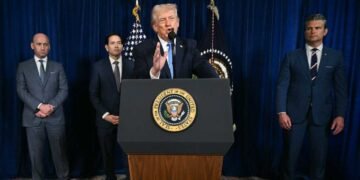
President Donald Trump has escalated the U.S. drug war by authorizing military intervention in Venezuela, resulting in the removal of President Nicolás Maduro and his wife, Cilia Flores. This action, announced during a press conference at his Mar-a-Lago residence, has drawn attention for both its boldness and the potential consequences it may have on U.S. foreign policy and drug trafficking efforts.
Why It Matters
This military invasion marks a significant turning point in U.S. strategy against drug trafficking and reflects a shift from public health approaches to more aggressive military tactics. The motivations behind the intervention, primarily linked to drug-related charges against Maduro, have ignited a debate about the implications for international law and U.S. accountability in foreign military operations.
Key Developments
- Trump has ordered the military invasion of Venezuela, leading to the ousting of Nicolás Maduro and Cilia Flores.
- Both Maduro and Flores have been charged with narcotics trafficking and narco-terrorism by the U.S. Justice Department.
- Attorney General Pam Bondi announced that they will face "the full wrath of American justice" in U.S. courts.
- The military action aligns with Trump’s ongoing efforts to designate drug cartels as terrorist organizations.
- Critics, including drug policy analyst Jeffrey Singer, argue that recent pardons of other convicted drug traffickers undermine the government’s declared objectives in combating drug trafficking.
Full Report
Military Action in Venezuela
Trump’s decision to launch a military intervention in Venezuela follows a series of increased hostilities between the U.S. and Maduro’s regime, which the president has labeled a "narco-dictatorship." The charges against Maduro recently publicized include severe allegations of narcoterrorism and connections to drug trafficking that purportedly funnel drugs into the U.S.
During Saturday’s news conference, Trump acknowledged the seizure of Venezuelan oil fields as a separate motive for his military action but stressed that combating drug trafficking was a fundamental purpose behind the assault. According to Trump, Maduro’s activities pose a direct threat to U.S. safety and stability.
Controversial Pardons Raise Doubts
Simultaneously, Trump’s recent pattern of pardoning individuals associated with drug crimes has raised eyebrows among critics. Last month, he granted clemency to former Honduran president Juan Orlando Hernandez, who had faced serious charges linked to cocaine trafficking. This inconsistency in the administration’s approach has led some policy analysts, like Jeffrey Singer from the Cato Institute, to question whether the drug war is genuinely a driving concern for the administration.
Singer expressed skepticism about the integrity of the operation, suggesting that if the primary goal were indeed to combat drug trafficking, recent pardons of high-profile drug offenders contradict that mission.
Justifications in Question
In a further attempt to justify the pardons, Trump claimed during the press conference that Hernandez was unfairly prosecuted by the Biden administration, though no evidence was presented. His overall handling of drug-related offenses has been criticized for sending mixed signals about the administration’s commitment to addressing drug issues.
Context & Previous Events
Earlier in his presidency, Trump authorized the designation of certain drug cartels as terrorist organizations and has taken unprecedented steps to deploy military resources against alleged drug traffickers. These actions have been met with both praise and criticism, with conservative commentators applauding the tough stance, while others warn of the implications stemming from unauthorized military actions and the prioritization of drug charges as justifications for intervention.
As Trump continues to navigate these complex issues, the implications of this military action will likely extend beyond the immediate consequences, reshaping U.S. foreign policy and drug strategy in the years to come.






