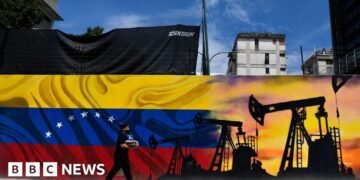























U.S. Military Actions Target Venezuelan Oil Amid Sanctions
In a significant escalation of tensions between the United States and Venezuela, the U.S. military recently seized an oil tanker purportedly transporting Venezuelan oil, defying existing U.S. sanctions. Venezuelan President Nicolás Maduro has accused Washington of attempting to commandeer the country’s vast oil resources, which are among the largest globally, while the U.S. maintains its focus on drug trafficking and the illegitimacy of Maduro’s government.
Why It Matters
Venezuela possesses the largest proven oil reserves in the world; however, its current production has plummeted due to years of mismanagement, infrastructure deterioration, and extensive U.S. sanctions. The recent military seizure underscores a complex interplay of geopolitical interests, economic viability, and potential humanitarian impacts. Understanding the stakes involved in Venezuelan oil is crucial as it shapes U.S. foreign policy and the future of the region.
Key Developments
- The U.S. military seized a tanker allegedly transporting Venezuelan oil in violation of American sanctions.
- President Trump has urged Maduro to step down, citing ties to drug trafficking and violence.
- Venezuela’s oil production has significantly declined to around 860,000 barrels per day, substantially below its historical levels.
- The last reported figure represented less than 1% of global oil consumption and was roughly one-third of production a decade ago.
- Limited involvement from U.S. companies exists, with Chevron being the only significant American oil producer remaining in Venezuela after sanctions.
Full Report
U.S. Seizures Spark Tensions
The tension has escalated as the U.S. military takes action against vessels allegedly involved in transporting Venezuelan oil. The latest seizure aligns with a broader U.S. strategy that has intensified under both the Trump and Biden administrations, focusing on curbing Maduro’s economic lifelines while addressing drug trafficking.
The Oil Debate
While the U.S. government publicly prioritizes drug-related issues and the legitimacy of the Maduro regime, some American lawmakers argue that Venezuela’s oil presents an attractive opportunity for U.S. businesses. Republican Congresswoman María Elvira Salazar stated that an influx of American investment could revitalize the Venezuelan oil industry, which once thrived.
However, any potential increase in U.S. engagement comes with challenges. Venezuela’s oil production capacity has dwindled severely, and restoring the sector would require significant investment and time. Analysts suggest that while current production levels are insufficient to impact global oil prices, strategic improvements could help elevate production to around two million barrels per day within two years if substantial investment is forthcoming.
Impediments to Growth
While American refiners express interest in Venezuela’s heavier crude oil due to its profitability, the long-term investment outlook remains uncertain. Analysts indicate that the oil market’s future now includes a cautious view, with predictions of plateauing oil demand in the coming decades. For companies looking to invest, the recovery of Venezuela’s oil industry may hinge on profitability, clear governance, and international relations.
Context & Previous Events
U.S. sanctions on Venezuela began in 2015 under President Obama due to allegations of human rights abuses. The sanctions have since broadened, targeting oil exports essential for Venezuela’s economy. Previous U.S. administrations have grappled with the challenges of navigating geopolitical relationships in the region, with Maduro’s administration facing increasing isolation and economic turmoil.
As the situation unfolds, the question remains: Is the U.S. primarily interested in Venezuela’s oil, or are the underlying motives more complex than they appear?