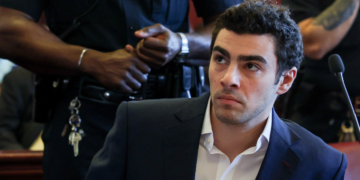























Legal Technicality May Impact Murder Charges Against Luigi Mangione
Luigi Mangione’s murder case could be significantly affected by a recent legal decision, as his defense team aims to leverage a recent federal court ruling to undermine the Justice Department’s charges. The implications of this argument are crucial, as they could potentially alter the trajectory of the high-profile case.
Why It Matters
The outcome of this case has far-reaching implications not only for Mangione but also for the standards of legal definitions surrounding violent crimes. If the defense succeeds in their argument that stalking does not constitute a "crime of violence," it could set a precedent affecting similar cases nationwide and challenge the legal framework under which federal murder charges are pursued.
Key Developments
- Mangione’s defense cited a Jan. 13 ruling from the Ninth Circuit Court, which determined that not all assaults with deadly weapons qualify as "crimes of violence."
- The defense contends that the underlying stalking charge in Mangione’s case doesn’t meet the federal criteria necessary for a murder charge, particularly one seeking the death penalty.
- Legal experts highlight the challenges of using past stalking accusations as a justification for capital murder.
- Prosecutors argue that the stalkings were part of a politically motivated assassination attempt on UnitedHealthcare CEO Brian Thompson.
Full Report
Legal Arguments
Mangione’s legal team is banking on a recent Ninth Circuit ruling in United States v. Gomez, which found that certain assaults do not meet the legal threshold for violent crimes. The court established that reckless actions could be mistakenly classified as intended harm, complicating the prosecution’s case against Mangione.
Joshua Ritter, a criminal defense attorney in Los Angeles, clarified the prosecution’s dilemma: "The only way that the federal government can secure a death penalty charge is if the murder occurred during a violent felony." Since the stalking aspect serves as the core of the charges, proving it as a "crime of violence" is essential to maintaining jurisdiction in federal court.
The Allegations
Mangione stands accused of stalking Brian Thompson, the CEO of UnitedHealthcare, across state lines and, later, fatally shooting him outside a New York hotel before a scheduled business conference. Despite the violent outcome, Ritter noted that the defense must argue that stalking can occur without leading to violence, thus challenging the basis for enhanced murder charges.
Implications of the Ninth Circuit Decision
The Ninth Circuit’s Gomez decision is not binding in the Southern District of New York, where the case is being tried. However, Mangione’s attorneys have pointed to it as a significant argument for dismissing the murder charge, asserting that stalking does not inherently equate to violent conduct. Donna Rotunno, a Chicago-based criminal defense lawyer, emphasized that this argument could pave the way for the defense to dismantle the murder charge linked to federal jurisdiction.
Prosecutorial Response
Prosecutors contend that the stalking was part of a deliberate, politically motivated assassination. Without proving the underlying violent crime, they argue, the murder charge—which carries the potential for the death penalty—should not stand.
Context & Previous Events
Mangione’s case follows the tragic shooting of Brian Thompson on December 4, 2024, in New York City. Footage showed the gunman approaching the CEO from behind before fleeing the scene. Thompson was a 50-year-old father and prominent figure in the healthcare industry. The implications of this case extend beyond its immediate legal ramifications, igniting conversations around violence, stalking laws, and the nature of federal jurisdiction in murder prosecutions.
As Mangione prepares to return to court, his defense team faces the daunting task of persuading the judge to heed their complex legal arguments amidst a backdrop of intense scrutiny.






