






















Guinea and CAR Hold Crucial Presidential Elections Amid Instability
Citizens of Guinea and the Central African Republic (CAR) will cast their ballots on Sunday to elect their presidents for a seven-year term. Both elections are critical, as the incumbents are favored to win outright, yet the political landscapes in each nation present stark contrasts in stability and governance.
Why It Matters
These elections take place in a context of political fragility and varying degrees of legitimacy in governance. While both incumbents aim to solidify their power, the pathways to their elections highlight broader issues of democracy, civil rights, and international relationships. The outcomes could influence regional stability and reflect the global community’s commitment to supporting democratic governance in these transitional states.
Key Developments
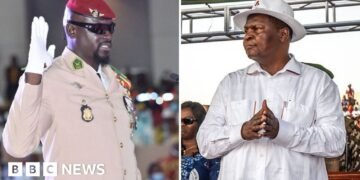
- Guinea’s Gen. Mamadi Doumbouya is seeking to transition from military to civilian rule after a coup in 2021.
- In the CAR, President Faustin-Archange Touadéra aims for a controversial third term following constitutional amendments to eliminate term limits.
- Both incumbents are expected to secure victories without the need for a run-off.
- Opposition figures in Guinea, particularly Cellou Dalein Diallo, have been excluded from the electoral race, raising concerns about the fairness of the process.
- The situation in the CAR has seen two significant rebel groups re-engaged in the peace process, marking a notable development for the war-torn nation.
Full Report
Presidential Elections in Guinea
In Guinea, Gen. Mamadi Doumbouya, who led a coup that ousted President Alpha Condé in 2021, is preparing to run in elections that feature eight challengers. Despite opposition critiques regarding his governance, Doumbouya has maintained a visible campaign presence in the capital, Conakry. Notably, Cellou Dalein Diallo, a significant opposition leader, has been barred from participating, casting a shadow over the electoral process and leading to criticisms from both local and international observers.
Political Climate in the CAR
President Faustin-Archange Touadéra is looking to secure a third term after modifying the constitution to remove limits on presidential terms, which has led to some opposition boycotting the elections. Initially seen as a unifying figure, Touadéra’s image has changed, and he now faces increased scrutiny due to political maneuvers that appear self-serving.
The CAR has experienced chronic instability due to various armed groups historically threatening the national government’s authority. However, recent developments reflect a degree of cautious optimism, as two major rebel factions have begun to rejoin peace talks and disarm. A dedicated court addressing human rights violations is also in place, emphasizing a commitment to achieving stability.
Context & Previous Events
The political landscape in both Guinea and the CAR reflects the larger challenges of governance and civil rights in West Africa. Ecowas, the regional bloc, has faced setbacks with recent coups in Mali, Burkina Faso, and Niger, leading to a climate where transitions to civilian rule are critical for regional stability. Guinea’s decision to restore an elected government, despite ongoing human rights concerns, has been welcomed by both regional leaders and Western governments. In the CAR, the presence of UN peacekeepers continues to be vital in maintaining order as the nation navigates its post-conflict recovery.