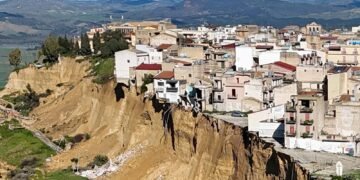























Landslide in Southern Sicily Leads to Mass Evacuations
Heavy rainfall in southern Sicily has triggered a landslide that caused part of the town of Niscemi to collapse, leading to the evacuation of over 1,500 residents. The disaster has left numerous homes precariously situated on the edge of a cliff, compelling authorities to establish strict safety zones as they assess the extent of the damage.
Why It Matters
This catastrophic event highlights the ongoing risks communities face in regions susceptible to natural disasters like landslides, particularly in areas with inadequate infrastructure. With a significant portion of Niscemi now deemed uninhabitable, the situation raises questions about urban planning and the long-term viability of living in vulnerable terrains.
Key Developments
- Heavy rains have caused the landslide to extend approximately 2.5 miles (4 kilometers).
- Authorities have designated a 150-meter-wide “no go zone” around the affected area.
- Italian Prime Minister Giorgia Meloni visited Niscemi to coordinate relief efforts.
- The federal government has declared a state of emergency, allocating an initial €100 million (£86.9 million) in support.
- Local officials estimate damage costs could reach €2 billion (£1.74 billion), affecting about 25,000 residents.
Full Report
Evacuations and Damage
The Niscemi landslide, initiated by Cyclone Harry, has resulted in numerous homes teetering on the cliff’s edge. Some structures and vehicles have already fallen nearly 20 meters onto the ground below. Civil protection chief Fabio Ciciliano has warned that parts of the town may be permanently unlivable, emphasizing the necessity for relocation efforts as the ground continues to shift beneath residents’ feet.
Government Response
Prime Minister Meloni surveyed the landslide from a helicopter and engaged in discussions with local officials regarding response strategies. In addition to the emergency declaration, the federal government’s commitment to aid signals an urgent need to address the disaster’s immediate impact and begin rebuilding efforts.
Community Displacement
Residents of Niscemi facing the collapsed areas will need long-term alternative accommodations as local officials work with the mayor to secure solutions for those affected. Ciciliano indicated that many homes situated on the landscape’s edge have become unsalvageable, forcing families to seek new housing options.
Shift in Focus
In light of the extensive damage and community displacement, opposition leader Elly Schlein has called for a reallocation of €1 billion (£869 million) planned for a contentious bridge project connecting Sicily to the mainland. Schlein argues that these funds should instead be redirected to aid recovery and rebuilding in regions devastated by recent storms.
Context & Previous Events
Niscemi is built on layers of sandy and clayey soil that are particularly prone to erosion and landslides during heavy rainfall. This incident is not unprecedented; a major landslide in 1997 forced the evacuation of 400 residents. Experts have noted that the current landslide is significantly more extensive, raising concerns about the stability of the region, which is located about 120 miles (195 kilometers) from Palermo.
As officials grapple with the immediate fallout of this crisis, the long-term implications for urban development and disaster preparedness in vulnerable areas remain pressing challenges.