























Shifting Dynamics in Syria: Government Forces Reclaim Territory from Kurdish Militias
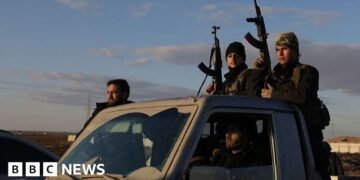
In a significant escalation of control, Syrian government forces under President Ahmed al-Sharaa have swiftly retaken substantial territory in northeastern Syria that had been held by a Kurdish-led militia alliance for over a decade. This rapid advance represents a pivotal shift in the ongoing struggle for authority in a country still grappling with the aftermath of a prolonged civil war.
Why It Matters
The reclaiming of territory by government forces is not only a milestone for Sharaa’s administration but also a profound blow to the Kurdish-led Syrian Democratic Forces (SDF), which have enjoyed a degree of autonomy backed by U.S. support. The developments have far-reaching implications for the stability in Syria as well as the future of Kurdish aspirations for autonomy within the region.
Key Developments
- Syrian government forces launched a swift offensive against the SDF, resulting in significant territorial gains.
- A 14-point agreement was signed between President Sharaa and the SDF, which involved the integration of SDF members into the Syrian armed forces individually rather than as a unified entity.
- Control of strategic resources, including oil and gas fields, is reverting to the government from the SDF.
- Following hostilities, Sharaa announced a ceasefire, allowing the SDF four days to propose a detailed integration plan.
Full Report
Swift Territorial Gains
In recent days, Syrian government troops have successfully advanced into previously SDF-controlled areas in northeastern Syria. This marks the largest shift in territorial control since the fall of Bashar al-Assad in 2024, which had originally ended a civil war lasting over a decade. Prior to this offensive, Kurdish forces controlled nearly a third of the country’s territory and operated a functioning government within that enclave.
The 14-Point Agreement
In response to its territorial losses, the SDF signed an agreement with the Sharaa government, reversing many of the concessions previously secured. Under the new terms, SDF members will join government forces as individuals, surrendering previous expectations of maintaining their structural independence. Additionally, control of vital oil and gas resources, which are essential for Syria’s economic revitalization, is transferring back to the state.
Ceasefire and Reactions
Days after the initial territorial recaptures, Sharaa announced a ceasefire, providing the SDF time to develop a detailed plan for the integration of its forces into the national framework. This move appeared to be a strategic pause designed to prevent further escalation as both sides seek to find a workable framework for coexistence.
Sharaa’s Outreach to Kurds
Amid the tensions, Sharaa issued a decree aimed at accommodating Kurdish interests by designating Kurdish as a national language and granting citizenship to stateless Kurds. However, the renewed fighting indicates deep-rooted sectarian tensions remain. Fears of reprisals are prevalent among the Kurdish population, especially given past sectarian violence during the Assad regime.
Context & Previous Events
The recent territorial reclaiming by Sharaa’s forces aligns with a broader strategy to centralize authority in Syria, a country marked by fragmentation since the civil war began in 2011. The Syrian Democratic Forces had previously enjoyed the backing of the U.S. after playing a crucial role in the defeat of the Islamic State. However, evolving U.S. policies under President Trump have shown a shift towards supporting Sharaa’s vision of a unified Syria. The agreement made last March between Sharaa’s government and the SDF had stalled, revealing underlying challenges in the negotiations related to integration and autonomy.
As the geopolitical landscape continues to change, the outcome of this dynamic conflict could redefine the future of governance in Syria, particularly for its diverse ethnic communities.