






















Kim Jong Un Fires Vice Premier Over Flawed Factory Modernization
North Korean leader Kim Jong Un has publicly dismissed Vice Premier Yang Sung Ho amid criticisms regarding a factory modernization project, highlighting significant internal political strains as the country approaches a pivotal Workers’ Party congress. The dismissal sheds light on Kim’s efforts to assert control and enforce discipline among his officials, reflecting ongoing concerns about economic management.
Why It Matters
The public reprimand of a senior official is uncommon in North Korea, where maintaining the image of strong leadership is paramount. Kim’s remarks indicate mounting pressure on government officials to effectively manage resources, especially in the wake of difficulties exacerbated by the COVID-19 pandemic. This incident also sets the stage for the Workers’ Party congress, where new economic and political strategies are expected to be discussed.
Key Developments
- Kim Jong Un dismissed Yang Sung Ho, the vice premier responsible for the machine-building industry, for alleged mismanagement of the Ryongsong Machine Complex modernization project.
- He cited “unnecessary man-made confusion” and significant economic losses due to the incompetence of officials as reasons for Yang’s dismissal.
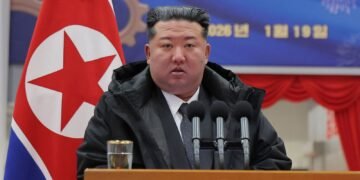
- During a speech, Kim outlined frustrations over wasted funds and labor, stating that the setbacks have burdened the munitions sector.
- Kim has previously criticized Yang in a meeting last year, describing the vice premier metaphorically as a "goat yoked to pull an ox cart."
- The Workers’ Party Congress, the first in five years, is projected to convene in January or February 2024.
Full Report
Public Reprimand and Dismissal
Kim Jong Un’s public dismissal of Yang Sung Ho represents a striking move in a nation where leaders often avoid overtly criticizing their subordinates. During a recent speech, Kim described Yang’s performance in leading the Ryongsong Machine Complex modernization as unsatisfactory and linked it to considerable economic losses. State media reported that Kim lamented the project’s management, asserting that it had resulted in a substantial waste of resources.
"The munitions industry sector was subsequently left with a heavier burden," Kim explained, thereby underscoring the repercussions of Yang’s alleged failures. This public rebuke serves as both a critique of Yang’s capabilities and a broader call for enhanced accountability among government officials.
Broader Economic Context
Kim’s remarks occur in the context of ongoing economic struggles in North Korea, which have been aggravated by the global pandemic. Although the economy reportedly grew by 3.7% in 2024, significant challenges such as stringent international sanctions and a rigid centralized economic system continue to hinder rapid recovery.
North Korea’s governance has increasingly focused on combating what Kim describes as defeatism and passivity in economic sectors. The upcoming Workers’ Party congress is expected to address these themes, potentially laying the groundwork for new policy directions aimed at revitalizing the economy.
Context & Previous Events
This dismissal follows a pattern where Kim has publicly criticized or removed officials to maintain discipline and redirect accountability during times of economic hardship. Earlier instances of such actions have typically coincided with significant policy failures or economic setbacks. Last year, Kim had already pointed out Yang’s deficiencies during a party meeting, foreshadowing Monday’s decisive action against him. The forthcoming Party congress, the first in five years, signifies a critical juncture for the regime’s approach to political and economic priorities moving forward.