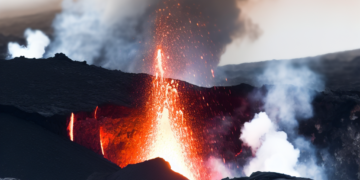























Kilauea Volcano Erupts Again, Sending Lava Fountains High Into the Air
The Kilauea volcano on Hawaii’s Big Island resumed its on-again, off-again eruption Tuesday, captivating both locals and tourists. The eruption saw dramatic lava fountains shooting up as high as 400 feet, though fortunately, no properties are currently at risk.
Key Points / What’s New
- Kilauea has erupted 37 times since December.
- The latest eruption featured lava confined within the summit caldera of Hawaii Volcanoes National Park.
- Fountains of lava have been reaching impressive heights due to the structure of the volcano’s vents.
Main Story Details
The U.S. Geological Survey reported that the latest eruption followed a series of sporadic spattering and overflow activity that started Friday. Each eruptive event has generally been short-lived, typically lasting about a day or less, with several days of quiet in between.
Kilauea’s lava fountains are notable for their height, sometimes reaching levels comparable to skyscrapers. This phenomenon occurs because the magma rising to the surface carries gases that are released as it ascends through narrow, tubular vents. As a result, the volcanic displays have been nothing short of spectacular.
Located roughly 200 miles south of Honolulu, Kilauea is one of the world’s most active volcanoes and one of six currently active in Hawaii, making it a significant geothermal feature in the region.
Background
Kilauea’s current eruption phase began in December and marks the 37th occasion that lava has been expelled since that time. The volcano is situated in Hawaii Volcanoes National Park, a protected area that draws visitors eager to witness its volcanic activity. Despite its impressive eruptions, Kilauea has posed no threat to nearby residences, allowing locals and tourists to enjoy its natural spectacle without concern.






