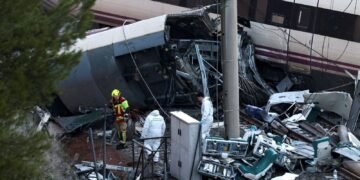























Tragedy Strikes as High-Speed Train Collision Claims Lives in Southern Spain
At least 39 people have died, and 170 others sustained injuries after two high-speed trains derailed in southern Spain on Sunday. The collision, which involved trains traveling to and from Madrid, occurred in Adamuz, impacting hundreds of passengers aboard both trains.
Why It Matters
This catastrophic event highlights ongoing concerns regarding the safety and reliability of high-speed rail networks, a vital transportation mode in Europe. With Spain’s extensive train services, the implications of such an incident extend beyond immediate loss, raising questions about infrastructure safety and emergency response protocols.
Key Developments
- The derailment occurred at approximately 7:45 PM local time, shortly after an Iryo high-speed train departed from Cordoba.
- The Iryo train was carrying around 300 passengers when it derailed and collided with a Renfe-operated train en route from Madrid to Huelva, which had about 200 passengers on board.
- Transport Minister Oscar Puente indicated the death toll is likely to rise as recovery efforts continue.
- By early Monday morning, emergency services reported that 122 individuals received medical treatment, with several, including minors, remaining hospitalized.
- Efforts to investigate the derailment’s cause are underway, though initial assessments point to an unusual occurrence on a recently renovated section of track.
Full Report
The Incident
According to officials, the rear section of the Iryo train derailed before colliding with the front of the Renfe service, dislodging its first two carriages down a four-meter slope. Emergency responders encountered challenging conditions as wreckage obstructed access to victims. The Cordoba fire chief elaborated on the difficulties faced during rescue efforts, emphasizing the complexity of the situation.
Eyewitness Accounts
Passengers recounted harrowing experiences during the incident. One traveler described feeling a violent jolt, followed by the collapse of the overhead structure. Eyewitnesses noted that chaos ensued as people screamed and panic spread throughout the carriages. Many passengers utilized emergency equipment to escape the wreckage, highlighting a swift response amidst turmoil.
Response and Investigation
High-speed rail services between Madrid and Andalusia have been suspended as authorities manage the aftermath. All related train routes, including those connecting major cities like Cordoba and Seville, will remain closed at least through Monday. Railway companies have set up assistance centers for the families affected, offering psychological support as investigations commence.
Renfe’s president acknowledged the unexpected nature of the incident, noting that the cause remains undetermined. Preliminary inspections suggest the Iryo train was operating within safe speed limits prior to the derailment.
Context & Previous Events
This incident follows ongoing scrutiny of high-speed rail operations in Spain, which has invested significantly in its rail infrastructure. The safety protocols and response measures following such unexpected events are crucial for restoring public confidence in this mode of transportation.