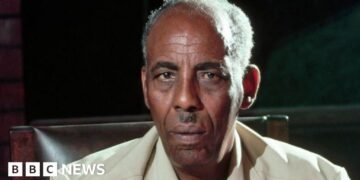























The Secretive Journey of Siad Barre’s Body: A Mission Steeped in Risk and Secrecy
In a remarkable tale of clandestine diplomacy, two Kenyan pilots undertook a secret mission 31 years ago today to transport the body of Siad Barre, Somalia’s former ruler, from Nigeria to his birthplace for burial. With fragile regional relations at stake and the shadow of potential political fallout looming, this operation required careful navigation through multiple governments and sensitive protocols.
Why It Matters
Barre’s legacy is deeply polarized; while some view him as a pan-Africanist leader who fought against apartheid, others remember him as a dictator responsible for widespread human rights violations. The return of his body to Somalia was laden with political sensitivity and reflects the complexities of handling historical legacies in a volatile region.
Key Developments
- Two Kenyan pilots, Hussein Mohamed Anshuur and Mohamed Adan, were approached by a Nigerian diplomat on January 10, 1995.
- They were tasked with secretly flying Barre’s body from Lagos, Nigeria, to Garbaharey, Somalia, amidst serious political implications.
- The mission was planned to circumvent typical protocols due to the urgency of Barre’s burial requirements under Islamic tradition.
- The pilots executed a strategic flight path, misleading air traffic control to keep the mission undisclosed, utilizing gaps in regional radar coverage.
Full Report
The Initial Request
The unusual mission began when a Nigerian diplomat directly approached Anshuur and Adan at Wilson Airport in Nairobi. They were to arrange a flight to transport Barre’s remains—a request that immediately raised their concerns due to its sensitive nature. Anshuur expressed his initial shock, stating, “We knew immediately this wasn’t a normal charter.”
Diplomatic Sensitivities
After initially advising the diplomat to consider a military aircraft, they felt compelled to accept the task, albeit with caution. The financial incentives were enticing, yet the political stakes were considerable, especially with a Kenyan government under pressure regarding Barre’s previous asylum.
The Execution of the Plan
Upon receiving assurances from Nigeria that any political fallout would be managed, the pilots began structuring their plan. They filed a false flight manifest indicating Kisumu, Kenya, as their destination. After departing late on January 11, they diverted to Entebbe, Uganda, to refuel—maintaining their ruse as they avoided revealing the true nature of their cargo.
On January 12, they prepared for the final leg of their journey. With Barre’s body onboard, they managed to keep the mission under wraps, even as they navigated back towards Somalia.
Arrival and Secrecy Maintained
Successfully landing in Garbaharey, the pilots offloaded the casket and attended the burial—ensuring their return to Nairobi was just as discreet. Anshuur described the return leg as “the most stressful part of their journey,” fearing potential complications with authorities. Incredibly, they communicated their arrival back in Kenya as if returning from a local flight, without triggering any inquiries.
Reflections on the Mission
Looking back, Anshuur noted the gravity of the situation, remarking that the sophisticated air traffic control now present in Africa would make such a clandestine operation much more difficult today. “I would not carry out a similar mission today," he concluded, recognizing the evolution of aviation technology since that tense January in 1995.
Context & Previous Events
Siad Barre was ousted from power in Somalia on January 28, 1991, leading to his eventual exile in Nigeria. His 21-year rule left an indelible mark on Somali history, characterized by both an initial rise to power via a bloodless coup and a subsequent decline marred by civil unrest and accusations of human rights abuses.